Rap Beef: The Red Line Between Art and Morality
The question posed in this article is very important as it touches on the core of rap culture, especially in the context of diss tracks and beefs, where the boundaries between freedom of expression and morality are not always clear. We will break down the answer into three main levels to understand this complexity.
Rap and Freedom of Expression: The Art of Verbal Warfare
Rap, by nature, is an unconventional culture that relies heavily on free expression and blunt honesty, which can sometimes be aggressive. From its beginnings in marginalized neighborhoods, it was a way for young people to express anger, marginalization, and the problems they face.
In diss tracks, expression becomes even more intense, as rappers enter what can be called “verbal warfare.” The goal is often to destroy the opponent’s image and belittle them in front of the audience. This reflects a concept of “there are no rules in war,” but even war has honor, as they say, and so does rap.

The Red Line in Rap Beefs: Does it Exist?
This is where the moral issue comes in: Are there red lines that a rapper shouldn’t cross?
- Family and Private Life
Some believe that attacking a person’s family, wife, or children is a crossing of boundaries and a lack of respect because it involves people who have nothing to do with rap or the beef. However, some use these topics as a psychological weapon to provoke the opponent, make them lose their composure, and push them to respond emotionally and weakly.
- Physical or Intellectual Insults
Another issue that we hear about often in Moroccan rap diss tracks is insults that touch on disability, origin, or religious beliefs, for example. The issue then becomes close to discrimination or hatred, and this raises a significant problem. Some rappers use this type of diss to further portray their opponent as weaker, but today’s audience is more aware and is starting to differentiate between cleverness in a diss and insulting something that is God-given.
WATCH Pause Flow vs. L’Morphine | Voted ‘The Best Moroccan Rap Beef of All Time‘ by over 300 insiders.
Examples of Rap Beefs that "Crossed the Line"
The history of Moroccan rap is full of examples of beefs where things reached personal matters. Here are three examples:
PAUSE Flow vs. Muslim: When rapper Muslim decided to diss PAUSE Flow in ‘Khamri’, PAUSE then was going through a lot, which led him to release the track “Azoul,” in which he snapped on everyone. Pause delved into personal matters, such as Muslim’s divorce from his children’s mother (first wife) and his marriage to Moroccan actress Amal Saqr (second wife), using it to insult Muslim and say that he “broke up his family.”
PAUSE also involved Moroccan streamer Souhail‘s mother when he told him, “The words of righteousness you want to say to me, say them to your mother,” implying that his mom is not righteous. Even music reviewers like Famillia got involved in the diss, and PUASE personally insulted her by saying she had “no religion, no creed.”
Don Bigg vs. Dizzy Dros: In the diss tracks “Al-Mutanabbi” and “170kg,” Dizzy Dros’s wife was brought up as a “prostitute” and that Dizzy married her. Dizzy Dros also said to Bigg that he exchanges G-strings with his wife. This shows a clear targeting of women in a diss, as if to win, you have to find something to say about the rapper’s wife.
Diib vs. Ouenza: This beef also went too far, as both of them brought up each other’s families. Diib told Ouenza, “I know your mom used to hang out and your dad was absent,” and Ouenza responded, “Your dad forced himself on a minor and married her just so you wouldn’t be called a bastard.”
WATCH Pause Flow – AZUL (Official Audio) | After a wave of disses and personal struggles that forced him out of the spotlight, Pause Flow made a sudden comeback with the diss track ‘Azul,’ responding to rappers like Muslim, Lmorphine, and Lembowe9.
The Philosophical and Moral View of the Subject
From a philosophical and moral perspective, rap seems very profound, as it concerns the balance between freedom of expression and moral responsibility, especially in an art form like rap that uses street language and sometimes gets very close to real-life violence.
Freedom of Expression vs. Morality: John Stuart Mill and Immanuel Kant
- John Stuart Mill, the liberal philosopher, advocates for absolute freedom of expression, unless it directly harms others. From his perspective, a rapper can curse and insult, but if he attacks people’s honor and causes them real psychological harm (family, illness, disability…), he must bear the responsibility.
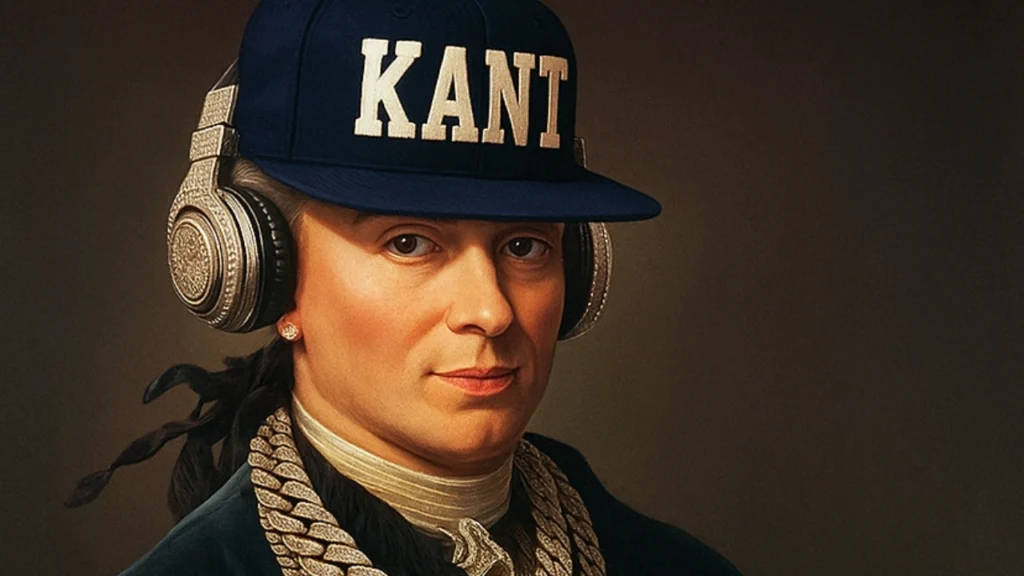
- Immanuel Kant, the moral philosopher, advocates for the principle of “treat others as you would like to be treated.” In the context of rap, a diss should remain artistic, while involving private life is a form of using others as a tool, which Kant considers immoral.
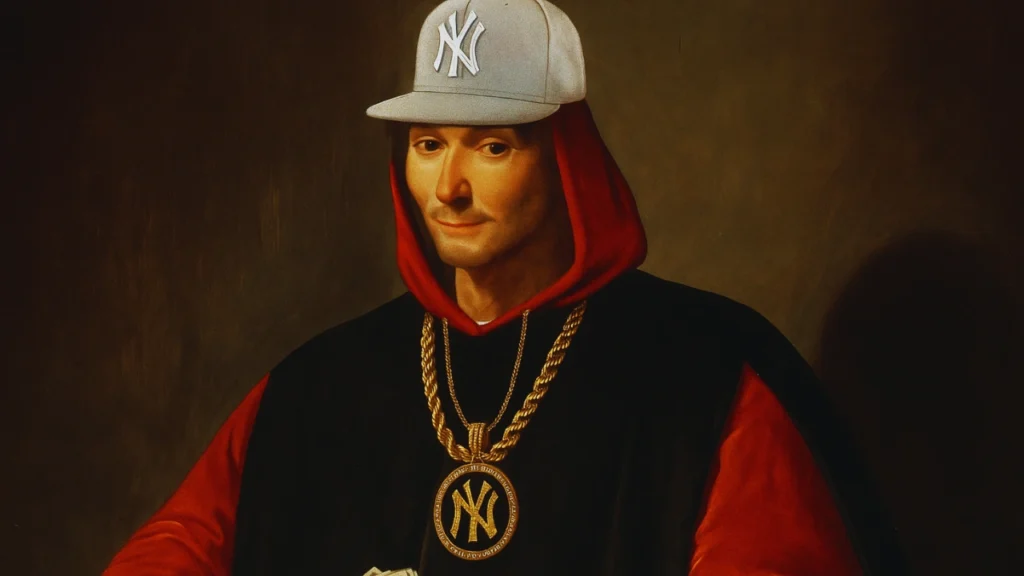
Does the End Justify the Means? With Nietzsche and Machiavelli
- Nietzsche might see harsh diss tracks as an expression of the “will to power,” and that a strong rapper should not be afraid of talking about their family, wife, and flaws. However, Nietzsche respected the individual who is strong in their own right, not one who brings others down just to look powerful.
- Machiavelli, known for the principle “the end justifies the means,” believes that to win a conflict, you have to do whatever it takes. If your goal is to dominate the scene, you must bring up anything to appear as the winner. But this is a pragmatic vision without morals; it relies only on the outcome, not on principles.
The Philosophy of Rap Beef: To Harm or To Be Harmed?
Rap as an art of protest, like Greek theater or black comedy, is a way to expose reality and reveal suffering, not to insult and curse without limits. A true rapper must be an artist, not just someone who insults, and they must know how to use a personal angle of another with artistry, not just as a standard.
Because words have weight and create an image in society. If a rapper spreads verbal violence, hatred, or mocks a person’s body or family, they contribute to the normalization of cultural violence. Therefore, rap is an art form that expresses, but it must rise above the gossip and slander and rely on creativity.
Rap does not have strict moral censorship, but it has a collective consciousness that forms over time. A rapper who attacks people’s private lives gambles on a “knockout punch” and expects to finish off the person, but they must bear the audience’s reaction and the consequences, because in the end, we are all human and have feelings.
Written by:
Amine Dionysus
Translated & Edited by:
Moujahid Ben Tarki
Author
 View all posts
As a philosophy teacher and a rap music fan, Dionysus bridges intellectual rigor and hip-hop culture through his analytical video essays. Specializing in Moroccan rap, he deciphers philosophical references in lyrics of intellectually profound artists in Moroccan rap - including L'Morphine, Pause, Raid and Diib - revealing how their music engages with existential questions, social critique, and even direct nods to thinkers like Nietzsche or Camus. His work transforms street poetry into a dialogue with academia, proving that philosophy thrives far beyond the classroom.
Connect with Dionysus: https://www.instagram.com/4_dionysus/
YouTube: https://www.youtube.com/@4_Dionysus