H-Kayne: A Timeline of Morocco’s Hip-Hop Vanguard
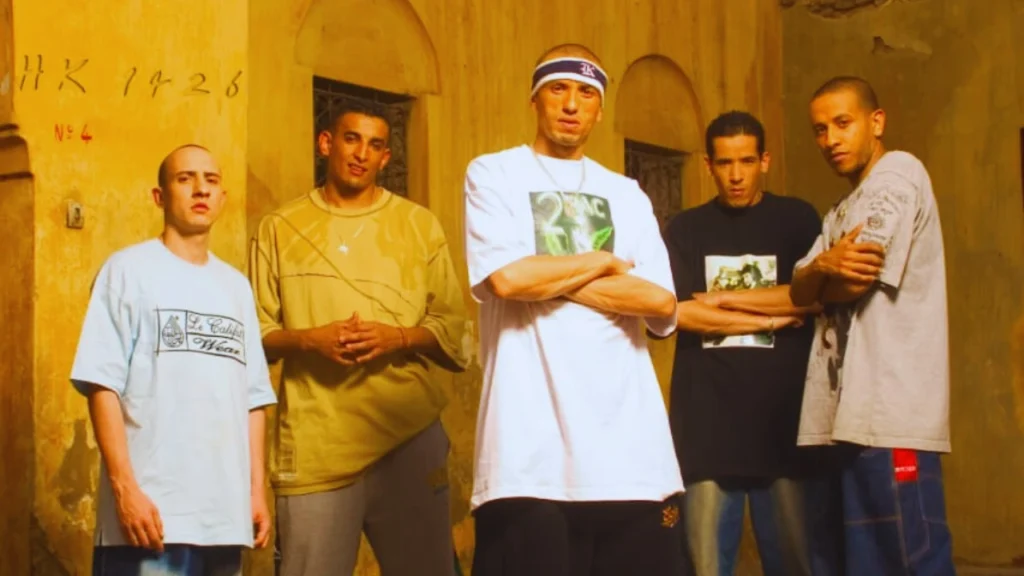
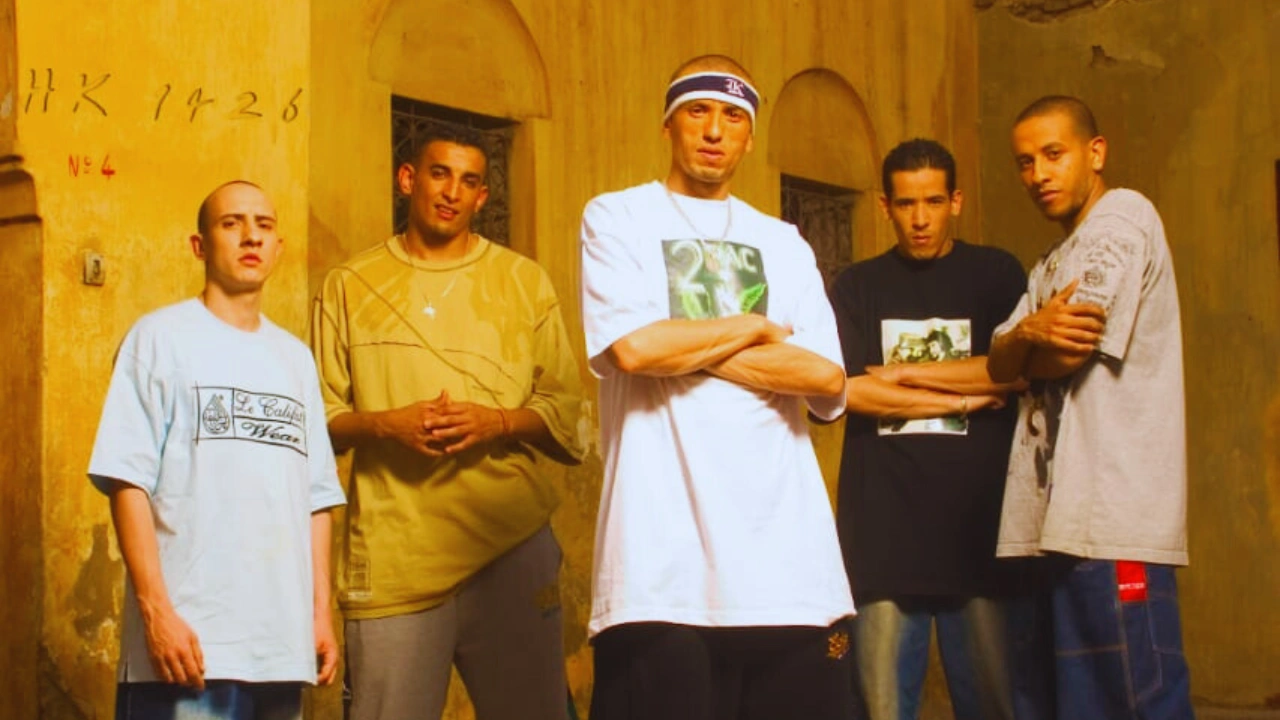
This article, which has been reviewed and approved by the members of H-Kayne, presents a comprehensive timeline of the group’s career. It details their journey from Meknes’s underground scene to becoming national cultural ambassadors and pioneers of the Morap genre. The information has been verified and collaboratively shared, serving as an official history of one of Morocco’s most influential musical acts.
H-Kayne are known for using punchlines inspired directly from the streets of Meknes, often popularizing local proverbs and slang, like Ba Makna (slang for Meknes). This deep connection to their city, along with their high-energy stage presence, dominant voices, and commanding body language, established them as some of the best live performers for decades.
History: H-Kayne’s ‘Issawa Style’ considered the oldest Moroccan rap music video on YouTube, uploaded on February 27, 2006.
1996: The Formation of the Dogs
H-Kayne begins as the Dogs, a group of friends in Meknes who share a passion for hip-hop culture, including beatboxing and b-boying. The original lineup included Adel Benchekroun (Sif Lssane), Hatim Bensalha (HB2), Ezzedine Bouhout (Ter 7or), and Othman Benhami (Othman). DJ Khalid joined the group in 2001.
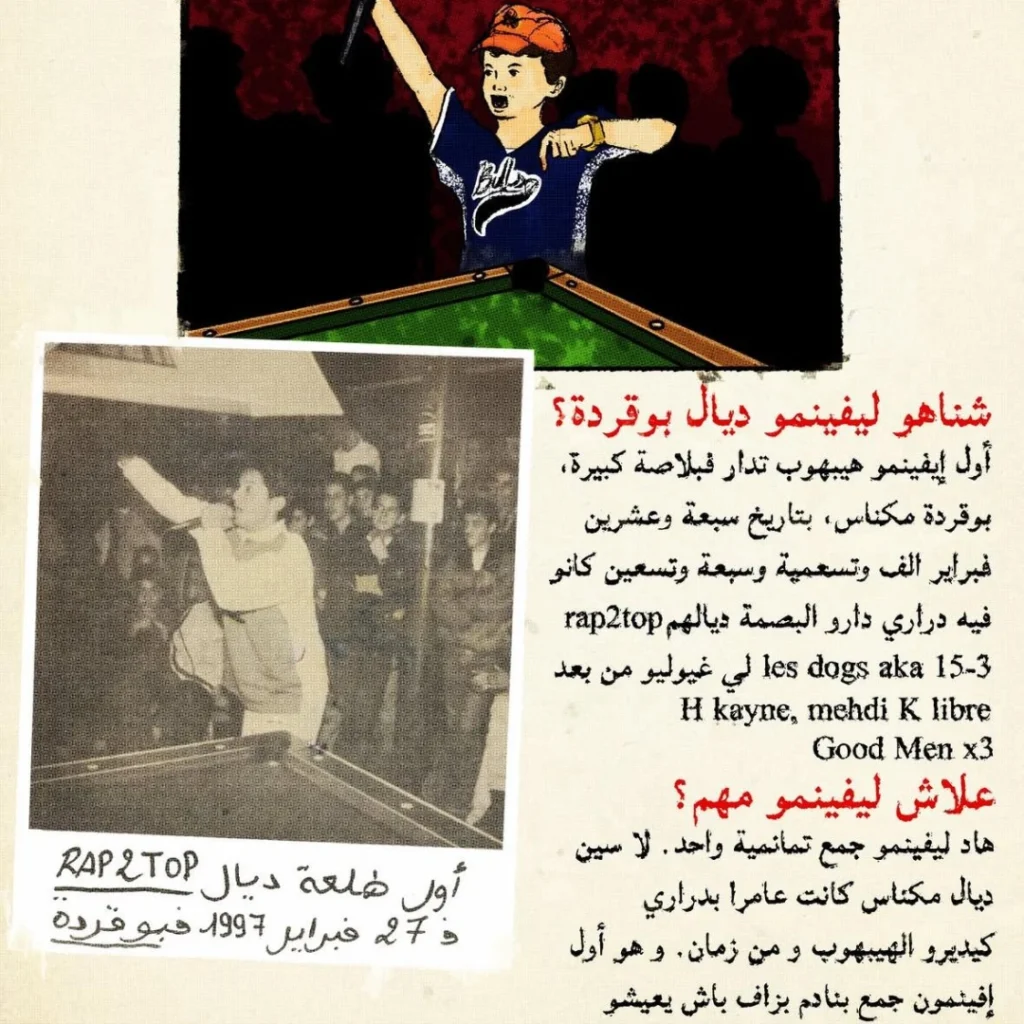
1997: The Boukarda Event - Morocco's First Major Hip-Hop Gathering
On February 27, 1997, the Boukarda Event takes place in Meknes, often cited as the earliest large-scale hip-hop gathering in Morocco. This pivotal event brings together over 800 people and features early Moroccan rap acts like Rap2top, Mehdi K-Libre, Good Men x3, and the Dogs (H-Kayne). It signifies the burgeoning hip-hop scene in Meknes and the passion of the youth who were instrumental in cultivating the culture from its nascent stages.
1999: The Dogs' First Cassette
Under the name “Dogs,” the group records their first project, a cassette titled 15-3 MKS, in a single, high-pressure session (8 tracks, each in one take). This if-you-miss-we-start-all-over approach to recording, a necessity of the analog era, honed their discipline, breath control and stage presence. The raw energy of this early work laid the groundwork for their future sound, capturing the unfiltered “rage and passion” of the underground.
2001: The DJ Factor – Khalid Joins the Crew
In February 2001, DJ Khalid, a top-10 semifinalist at the DMC 2000 World DJ Championships, meets Hatim in Montpellier. This alliance proves crucial, significantly raising the group’s production values and opening doors to professional sound design. While Khalid’s tenure was not for the entire life of the group, he was an official member who worked on their first two studio albums, 1 Son 2 Bled’Art and HK 1426. DJ Khalid’s influence would later be vital, producing some of their most known tracks, including the iconic “Issawa Style” for their album “HK-1426.”
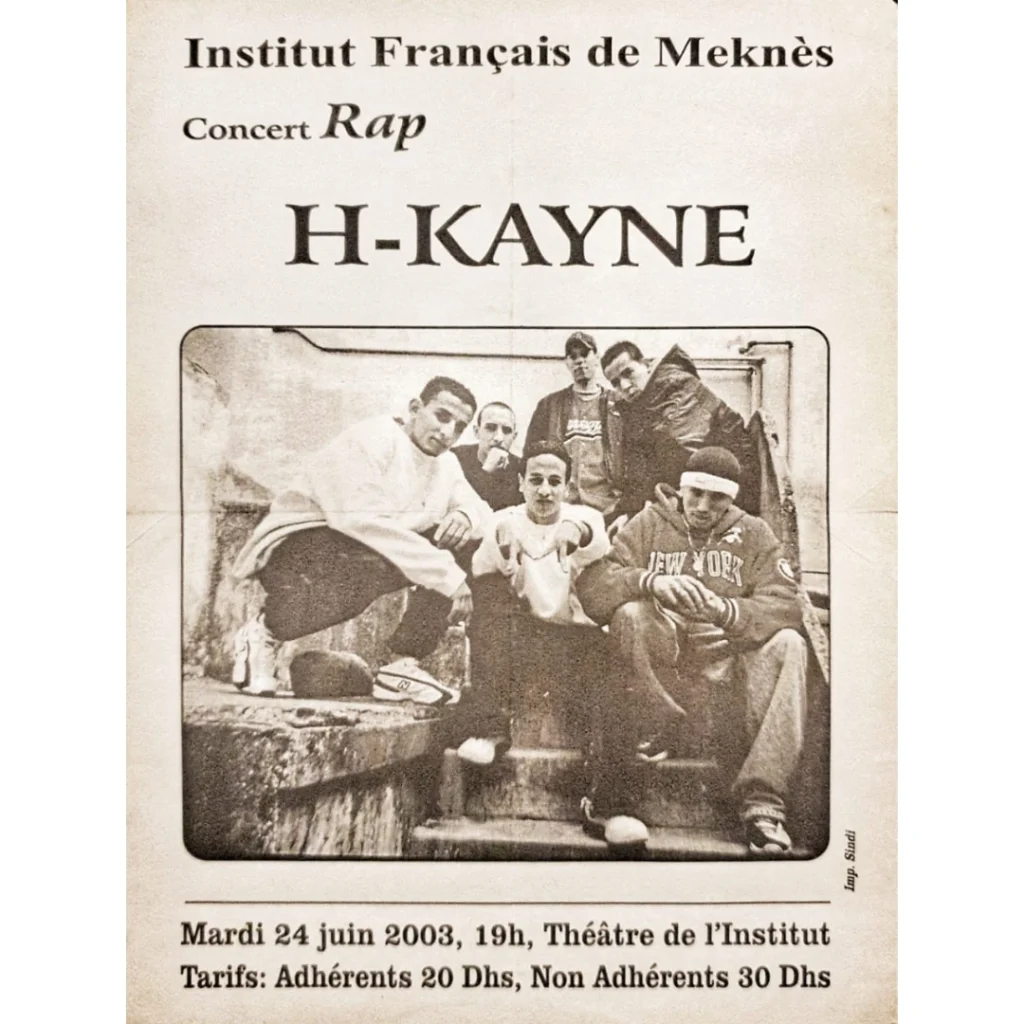
2003: Rebranding, Breakthrough Victory, and First Music Video
The group officially changes its name to H-Kayne, a clever play on the Darija phrase “ach kayne?” (what’s up?). This rebranding marks a new chapter and coincides with their win at Casablanca’s prestigious L’Boulevard des Jeunes Musiciens festival. This victory is a pivotal moment, legitimizing Moroccan rap and opening doors for the group. They release their first, self-produced studio album, 1 Son 2 Bled’Art, which captures the vibrant, coded style that would become their signature. Also in 2003, H-Kayne films their first music video for the single “H Kayne,” the song from which they got their new name.
2005: "I Love Hip-Hop in Morocco" Tour & "HK 1426"
H-Kayne embarks on the first-ever 100% hip-hop tour in Morocco, a three-city event named “I Love Hip-Hop in Morocco” with stops in Meknes, Marrakech, and Casablanca. This tour, documented in a 2007 film of the same name, brought together artists from across the country, activating the youth scene and proving hip-hop’s viability as a national movement.
This same year, H-Kayne makes history by signing with Platinum Records, an affiliate of Universal Music, becoming the first Moroccan rap group to secure an international recording contract. They release their landmark second album, “HK 1426,” which is also distributed in France via FNAC, marking it as one of the first (if not the first) Moroccan rap albums to be sold abroad. The album’s lead single, “Issawa Style,” becomes a cultural phenomenon.
Watch H-Kayne – Jil Jdid (Officiel Music Video HD) | Considered one of the most influential Moroccan rap music video.
The Soundtrack of Moroccan Hip-Hop: "Issawa Style"
The album’s lead single, Issawa Style, produced by DJ Khalid, becomes a cultural phenomenon. It fuses hip-hop with the Issawa ghaita, a traditional Moroccan horn associated to their native city, Meknes. The song is arguably the most well-known Moroccan rap track, with its ubiquitous presence at festivals, on television, radio, and everywhere else.
H-Kayne has performed Issawa Style on stage for over 20 years (since 2005), and it has become their signature song. The track has also become a tribute for rappers from other cities, who perform it when in Meknes to pay homage to the group and the city’s legacy as a hip-hop capital. Its enduring influence is seen in its continued sampling by younger artists, giving Issawa Style the title of “the soundtrack of Moroccan hip-hop.”
2006: Bataclan Performance and International Recognition
The group’s international reach continues to expand with landmark performances at major European festivals. This includes a historic headlining set at the legendary Bataclan in Paris, making H-Kayne the first Moroccan rap group to achieve this milestone, as well as a prominent showcase at France’s Garorock Festival. Through these stages, they bring their unique sound and Darija lyrics to vast, international audiences.
2007: First Major Ad Campaign
H-Kayne participates in the “Sma3ni” project, a landmark collaboration for a major company. The song “Sma3ni,” featuring H-Kayne, Don Bigg, Steph Ragga Man, and Khansa Batma, becomes the first Moroccan rap ad for a major company, Maroc Telecom, Morocco’s largest telecommunications network. The music video, directed by Khalid Douache, originally broadcasts in 2007, is released in November 2009.
2009: "H-Kaynology" and the Influential "Jil Jdid" Music Video
On August 10, 2009, H-Kayne releases their third album, H-Kaynology, a 100% Moroccan production showcasing a new level of professionalism through their self-produced structure, HK Prod. That same year, they release the music video for their track “Jil Jdid” (New Generation). Directed by Khalid DOUACHE and produced by SNRT, this video is considered one of the most influential Moroccan rap music videos.
While most videos of that era featured simple visuals of rappers in their neighborhoods, “Jil Jdid” stood out with its high production quality, compelling plot, and captivating visuals. Filmed in a hospital with the group dressed as doctors attending to a young man addicted to the internet, it symbolically addresses the “new generation’s” challenges, showcasing a level of storytelling and professional execution rarely seen in Moroccan rap videos at the time.
2011: UNDP Goodwill Ambassadors
In recognition of their positive influence on Moroccan youth, H-Kayne is appointed as Goodwill Ambassadors to Morocco for the United Nations Development Programme (UNDP) in 2006. This role underscores their transition from musical artists to respected cultural figures, using their platform to promote positive social change.
2013: Royal Recognition and Pioneering Honorees
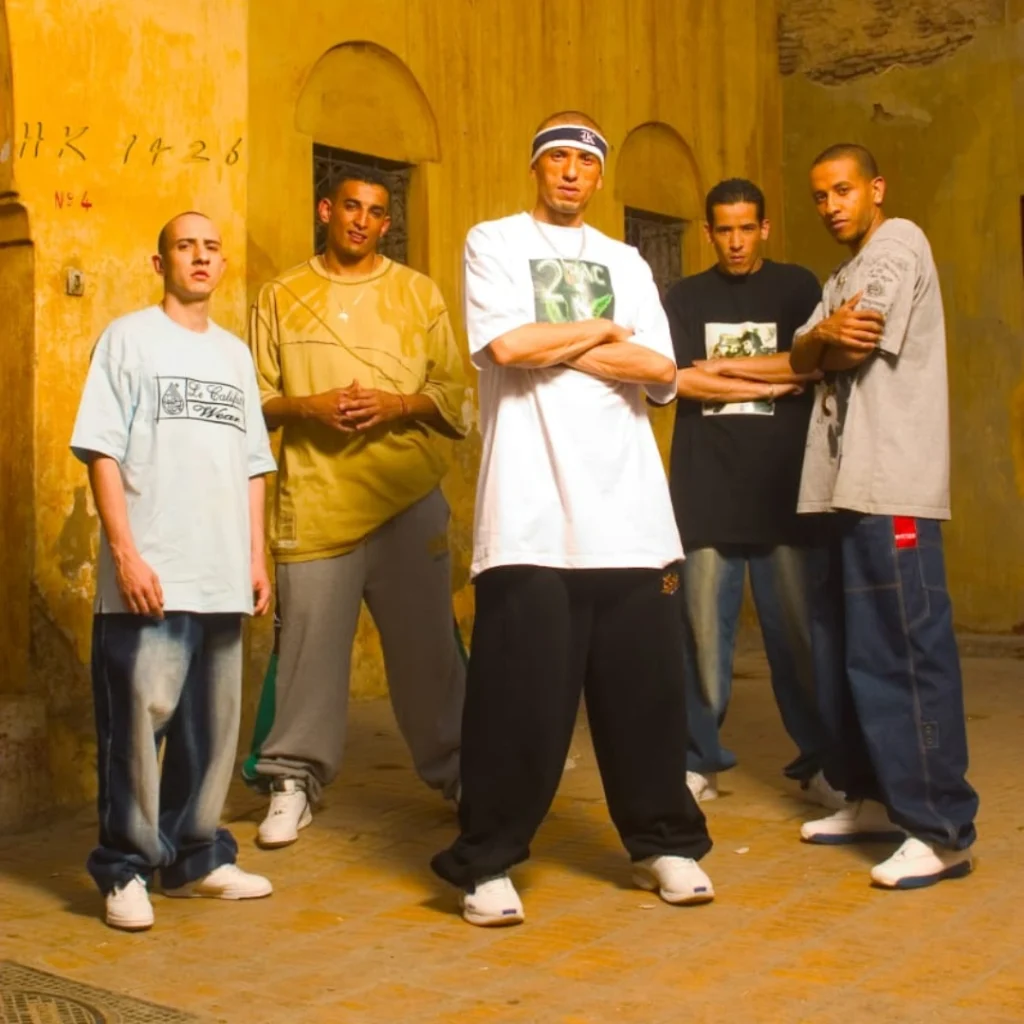
H-Kayne receives one of Morocco’s highest civilian honors, the Order of Ouissam Alaouite, bestowed upon them by King Mohammed VI, in 2013. This formal acknowledgment is significant, as it marks the only time this royal award has been given to rap acts, with H-Kayne being recognized alongside Don Bigg, Fnaire, Komy, and Muslim. This recognition further cements their status as national cultural ambassadors, following years of the King’s expressed admiration for the group.
2016: Mawazine Main Stage Performances
H-Kayne has been a consistent presence on the main stages of the prestigious Mawazine Festival, one of the largest music festivals in the world. They have headlined with their own sets in 2010, 2013, 2016, and 2018, among other appearances, confirming their status as a festival staple and a national treasure.
2020-Present: A Lasting Legacy and a New Album on the Horizon
Even as their individual careers have diversified, H-Kayne continues to be active in the music scene. The group members have been busy with their radio shows and touring, consistently releasing a song or two each year. Their presence in the music world remains strong, with a busy booking schedule for performances both nationwide and internationally. Recently, they announced in an interview with Billboard Arabia that they are working on a new album, a testament to their enduring passion and relevance.
Watch this feature-length documentary that chronicles the creation of Morocco’s first-ever hip-hop festival, from its initial concept to its final execution on stage. The film delves into the lives of artists navigating the complexities of culture and ambition, including: DJ Key, a self-taught turntable prodigy torn between his love for hip-hop and his devotion to Islam; H-Kayne, a pioneering rap group on the cusp of mainstream success; and the musical journey of iconic names like Don Bigg and Fnaire.
The Enduring Legacy of H-Kayne
H-Kayne’s legacy goes far beyond their discography. They are the architects (along with Fnaire) of what is now called Morap, a distinct subgenre of hip-hop that blends Moroccan instruments and rhythms with global hip-hop forms. By bringing traditional elements like the ghaita and qraqeb into their music, they created an identity for Moroccan hip-hop that is universally resonant.
In the years following their rise, individual members have continued to shape the Moroccan music scene.
Hatim H-Kayne, now a prominent artist manager, mentors the progidy Najm, applying the wisdom he gained from H-Kayne’s journey. He also contributed significantly to the industry through his decade-long tenure in artist relations at Morocco’s leading radio station, Hit Radio. Othman H-Kayne, a former basketball player, now serves as the CODM team’s head coach and a radio host at Medina FM, showcasing the diverse paths of the group’s members.
H-Kayne’s career is a blueprint for future artists. They showed that true innovation lies in looking at to your heritage, creating something new and powerful in the process. Their “Issawa Style” anthem remain part of the Moroccan cultural fabric, a testament to the fact that hip-hop, as Hatim says, “doesn’t belong to America anymore; it’s the world’s to reinvent.”
Listen to H-Kayne's music on Spotify
Author
 View all posts
A music critic and a researcher, Moujahid writes in-depth articles analyzing Moroccan and global hip-hop, blending insights from industry experts into compelling, well-rounded critiques. Beyond writing, he plays a pivotal role in shaping the magazine's editorial vision, refining its tone, structure, and style to elevate the reader's experience. As the lead editor, Moujahid meticulously oversees and polishes nearly all published articles, ensuring the magazine maintains its reputation as a trusted and influential voice in music journalism.