
Yo Asel: From Cracked FL Studio to Producing for North Africa's Top Rappers
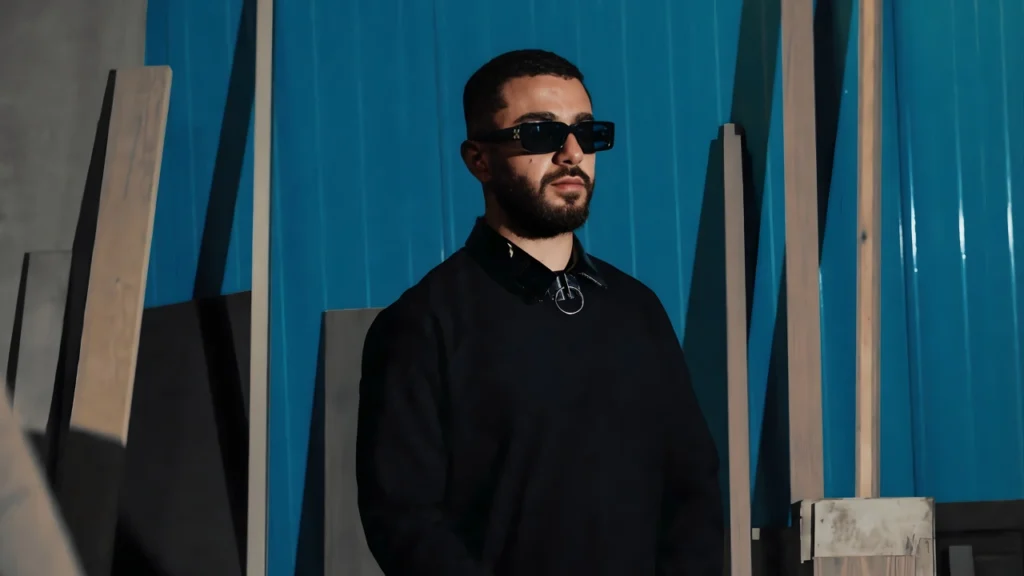
Born in 1994, in Oujda, Yo Asel, born Youssef Assil, grew up during a pivotal moment for Moroccan rap culture. His childhood soundtrack fused Biggie, 2Pac, and the signature sound of The Neptunes. By the time Morocco witnessed its first major rap breakthroughs: mostly H-Kayne’s album HK-1426 (2005) and Don Bigg’s album Mgharba Tal Moute (2006), the teenage was already experimenting with rapping and, soon after, production. Those albums sparked a nationwide wave of experimentation, introducing many young Moroccans to rap’s creative possibilities, and Yo Asel was among the first to pick up a mic.
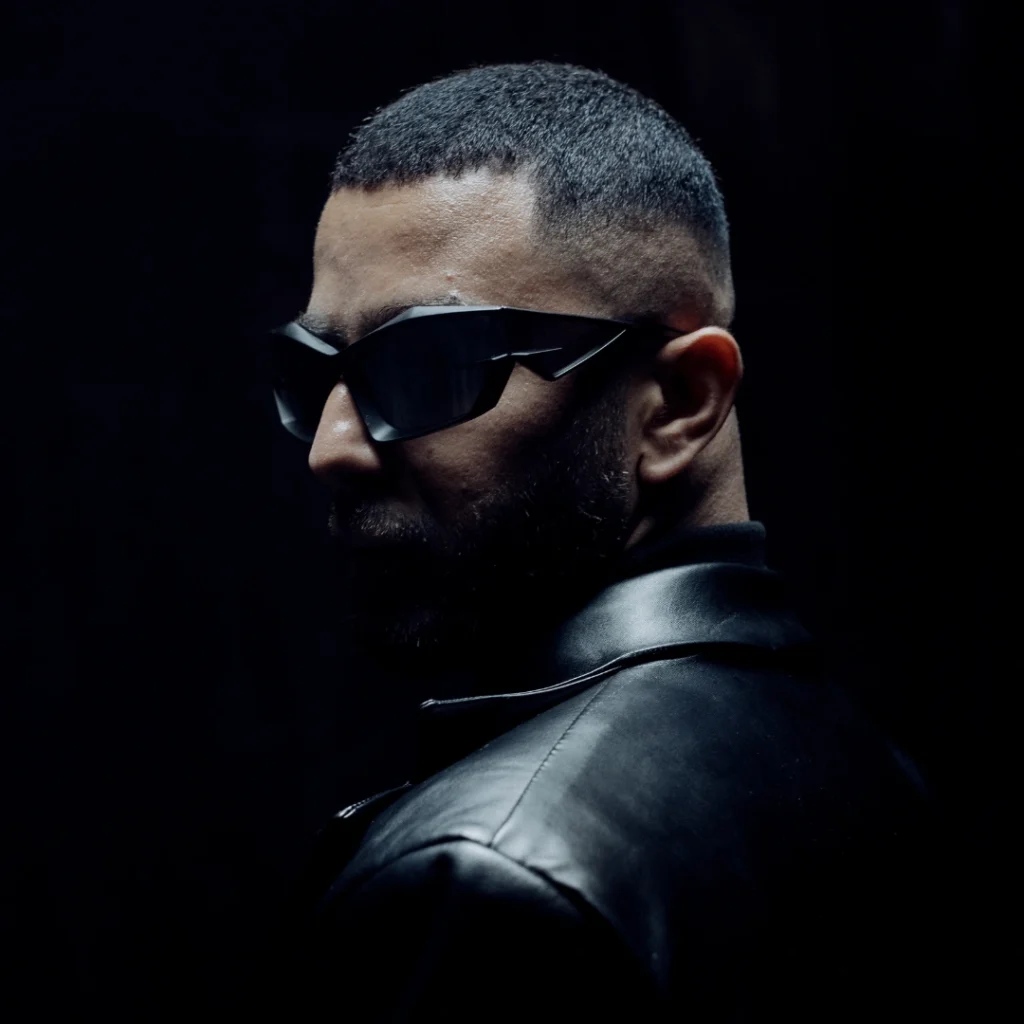
Today, he stands as one of the most influential Moroccan producers of his generation, a connector between North Africa, the Middle East, and the international hip-hop sphere; a behind-the-scenes architect for some of the region’s most widely consumed rap records; and increasingly, a front-facing creator with his own growing catalog.
In a conversation with DimaTOP, Yo Asel opened up about his early identity, his international influences, his legal dispute with French Montana, his role in iconic Moroccan rap releases, and the creative philosophy guiding his current work.
Yo Asel: Origins of a Name and a Sound
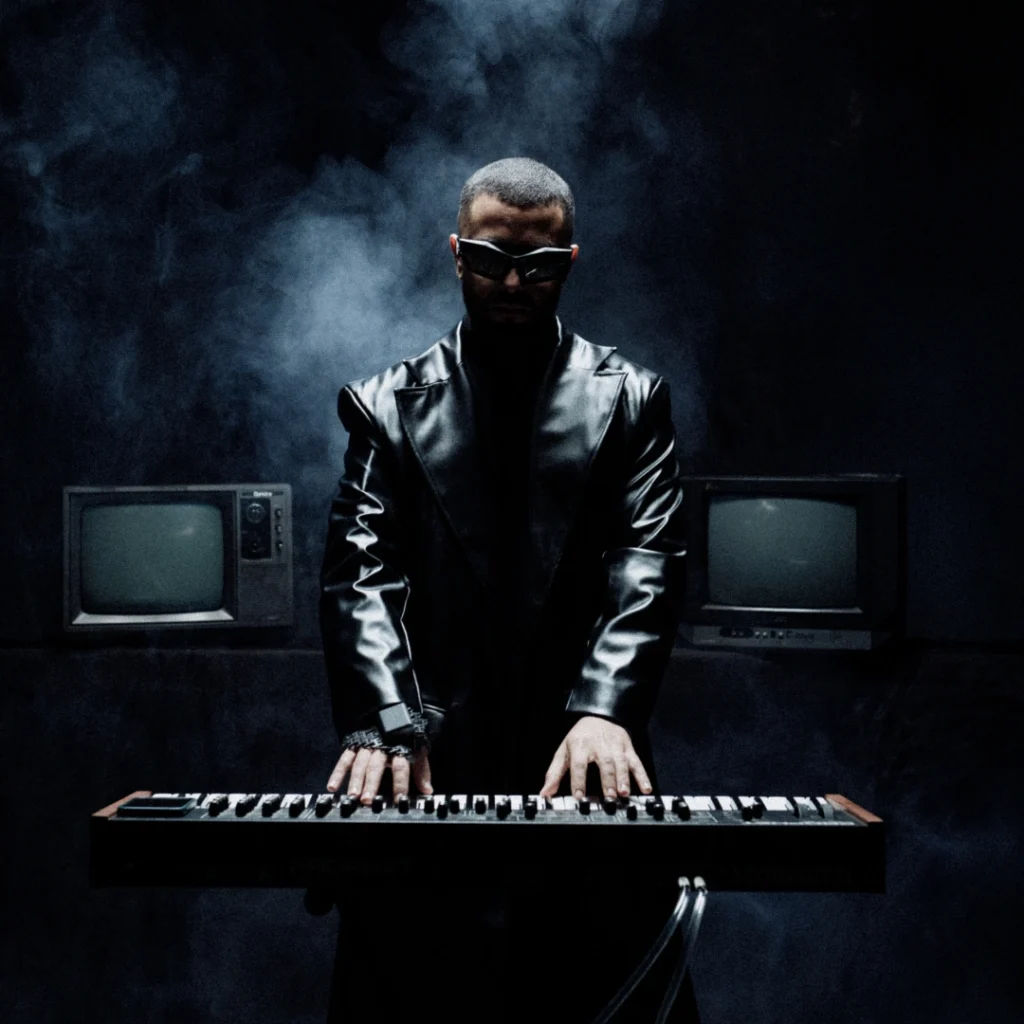
The moniker “Yo Asel” grew out of a playful reimagining of the producer’s own name. Originally “Young Asel,” he sought something that felt closer to the stylistic lineage of Pharrell Williams, the artist he repeatedly calls his “GOAT producer” and the central inspiration behind his sonic identity. “I didn’t want to do Youssef Assil,” he recalls. “So I did Yo Asel, a wordplay on ‘he continues’ in Arabic, (يواصل).” The name operates on multiple levels; in Arabic, ‘Aseel’ by itself means deep-rooted and original, allowing “Yo Asel” to also be understood as “you, the original.” He adds, “it’s also just a cool way of saying ‘Yo, Assil.’”
This nod to Pharrell and The Neptunes wasn’t symbolic only. Years later, when Moroccan rap star ElGrandeToto met Pharrell at the Gala Paris event, the producer received an unexpected message: “Toto called me excited telling me that Pharrell, through his assistant, informed the management that he liked ‘Tango,’ the song I produced.” Hearing such praise from one of The Neptunes was, in Asel’s words, “better than a platinum disc.”
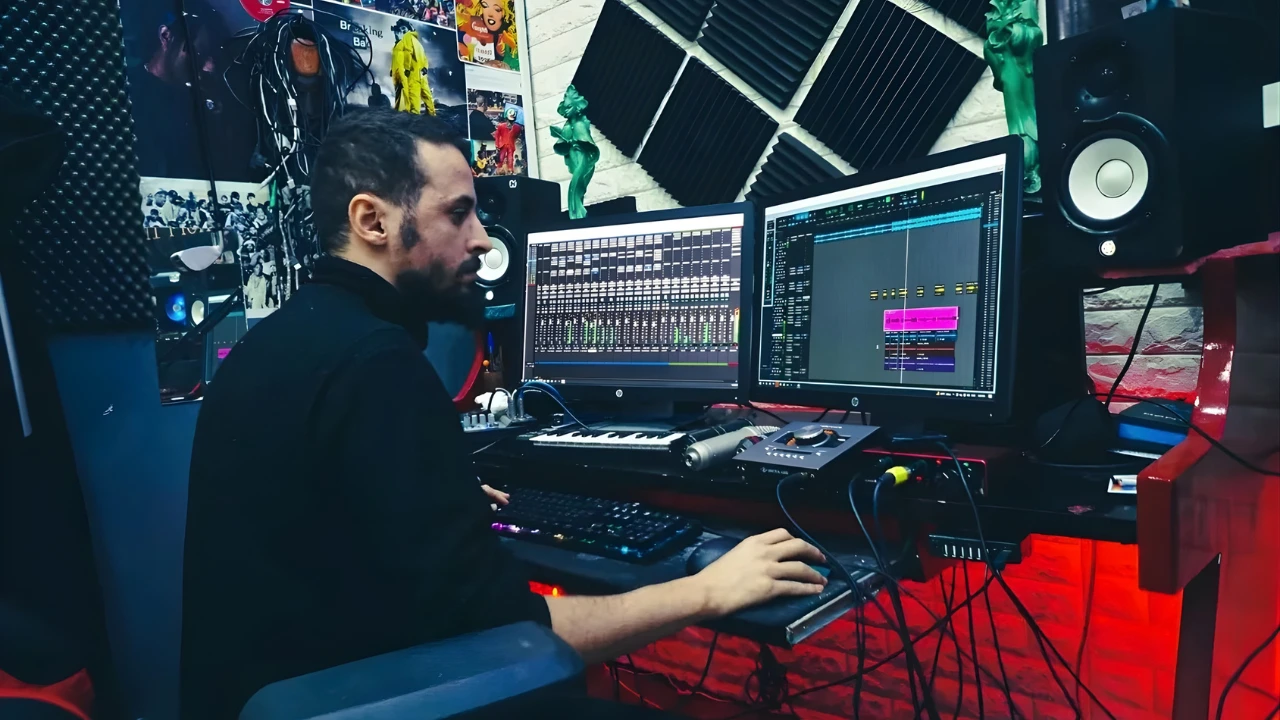
The roots of that sound go back to 2008–2010, when a young Asel was first introduced to FL Studio, the program that would shape his career. A neighborhood kid who was good with computers showed him the software, “but at first I didn’t understand anything. There were no tutorials in Darija back then, very little information in our languages.” He kept practicing on the demo version, unable to save projects, until someone finally cracked a full version for him around 2010. That allowed him to begin making beats more consistently.
By 2011, he crossed paths online with Shobee, who was already establishing himself with his group Shayfeen, and Shobee encouraged him early. “He liked what I was doing,” Asel says, a connection that would later become central to his rise.
VIDEO: Shayfeen – Wach Kayn Maydar (Prod. by Yo Asel) | This is one of Asel’s first viral tracks, if not the first, marking the start of an era defined by a string of hits with Shayfeen, including “Tcha Tcha” and “L’Vibe.”
Learning the Game: Early Experiments and Mistakes
Even before developing a local network, Asel was already interacting with emerging rappers in the U.S. “My first project was with some amateur rappers from New York around 2011,” he explains. At the time, he was deeply influenced by American artists and producers, more than by French hip-hop, and he spent significant time exploring SoundCloud and Twitter for new voices.
Between 2012 and 2014, he began testing his luck by sending beats to rising artists abroad, including Tory Lanez. “I sent emails, and once I got an email back [from Tory’s email] saying they liked one of my beats,” he recalls. “But I didn’t understand the business side. I used to spam rappers when they told me they liked my stuff. I didn’t know how to manage my work… my English was broken, and there was no ChatGPT or anything like that to help. I learned from those experiences.”
Those lessons became part of his enduring methodology. Today, he describes his approach as almost psychological: “I understand how to read and analyze artists. Some are sensitive, some are fun, some are serious, some are introverted. You have to study them, their moves, their tone, and all to have a good connection and get a good project together.”
Around this time, he briefly entered university for an English Literature degree after graduating high school in 2012. But the experience didn’t match his expectations. He spent the year mostly at home, “making beats, trying new things… it was for fun more than for a career.” Up to 2014, people rapped on his beats, but he still had no major placements.
VIDEO: SHAYFEEN, OUENZA, TOTO, MADD & WEST – TCHA RA | This is one of the most iconic rap songs of its era, a definitive track that shaped the sound of 2018.
French Montana's “Lockjaw” Story: A Major Industry Lesson
The turning point arrived unexpectedly. Through a contact connected to French Montana’s camp, Asel obtained an email and sent two beats around 2012–2013. One of them became the instrumental for “Lockjaw,” released in 2016 by French Montana ft. Kodak Black. The track grew into a landmark hit for both artists, later remixed by DJ Khaled, Rick Ross, and others, but Asel was not credited.
“I didn’t do anything. I was broke. I felt helpless. I didn’t have the ability to do anything,” he says. The song went on to sell over 2 million copies and get certified platinum, earning industry acclaim and pop-culture saturation.
The situation resurfaced publicly in 2017, when Shayfeen, during a radio interview promoting their hit song “Wesh Kayn Maydar,” mentioned the issue with Montana. That visibility reached Cilvaringz, the producer known for executive-producing Wu-Tang Clan’s rare project Once Upon a Time in Shaolin. During a seminar with Manal’s team, Cilvaringz told Asel he was aware of his case and offered help.
After accepting, Asel worked with a U.S. lawyer for more than a year. “We had a settlement with Montana. They acknowledged that I am the producer, with my percentages, and all.” Watching “Lockjaw” become a classic was rewarding enough, but one moment meant even more to him: hearing the track included in WWE 2K17 was amazing, but hearing it on the radio stations of GTA V was something else. “GTA is my childhood game. I grew up on San Andres. To hear my production playing there is surreal.”
VIDEO: French Montana – Lockjaw (Official Video) ft. Kodak Black | Produced by Yo Asel, “Lockjaw” is a classic by French Montana and Kodak Black, certified double platinum for selling over two million units and featured in major video games like GTA V.
Breaking Into Moroccan Rap: Shayfeen, Wa Drari, and AFRIMA Awards
By 2015–2016, Asel began spending more time in Casablanca. He reconnected with Shobee and the wider Wa Drari collective, a pivotal group in modern Moroccan rap. “We got along musically very well,” he says, and the chemistry soon translated into new opportunities.
The watershed moment came with “Wesh Kayn Maydar” (2017), produced for Shayfeen (Shobee & Small X). The track went viral, creating a wave of recognition for the duo and for Asel’s production style. It attracted attention from the French-Moroccan rapper La Fouine, garnered interest from actor Saïd Taghmaoui, and even caught the ears of French label executives. “Record labels were a new word for us,” Asel notes. “We didn’t know anyone who was signed back then.”
“Wesh Kayn Maydar” also served as Shayfeen’s entry to the AFRIMA Awards, where they won Best Male Artist in North Africa in 2017, a first for any Moroccan hip-hop act.
While in Casablanca, Asel also produced influential releases such as “Bingo” (2017) by Madd ft. 7liwa and A6 Gang, and Manal’s “Nah” (2018) featuring Shayfeen, which has accumulated over 22 million YouTube views.
Inside the Making of Cameleon: A New Era for ElGrandeToto
From July 2019 to March 2021, Asel and his fellow Oujda-native, the multi-faceted artist Draganov, jointly oversaw the entire production of ElGrandeToto’s album Cameleon, a project now viewed as one of the most significant releases in the region’s streaming era.
“It sold a lot of units in France and across Europe,” he says. The album became the first rap project from the region to reach 100 million Spotify streams, while dominating charts in North Africa and the Middle East (MENA). Asel credits the collaborative dynamic directly: “To be honest, without Draganov, they’d have no Cameleon.”
Within the album, Asel produced several key records, including: “Hala Hala” — Toto’s first track to top YouTube trending in Morocco. “He didn’t really like that beat,” Asel reveals, “but we kinda persuaded him to try it. DJ Snake vibed to it live on IG, which felt like he understood exactly what I did.” The chart-topping “Tango,” which dominated Spotify rankings alongside the hit song “Santa Fe”.
Simultaneously, he continued producing beyond the album, including collaborations with Wegz on the Deezer-exclusive “Msh Khalsa” (2021), and standout tracks such as “Price” with Small X.
VIDEO: Halla Halla (Prod by Familionnaire X Yo Asel) #CAMELEON | Produced by Yo Asel
The Covid Effect: Lockdown and Reinvention During Crisis
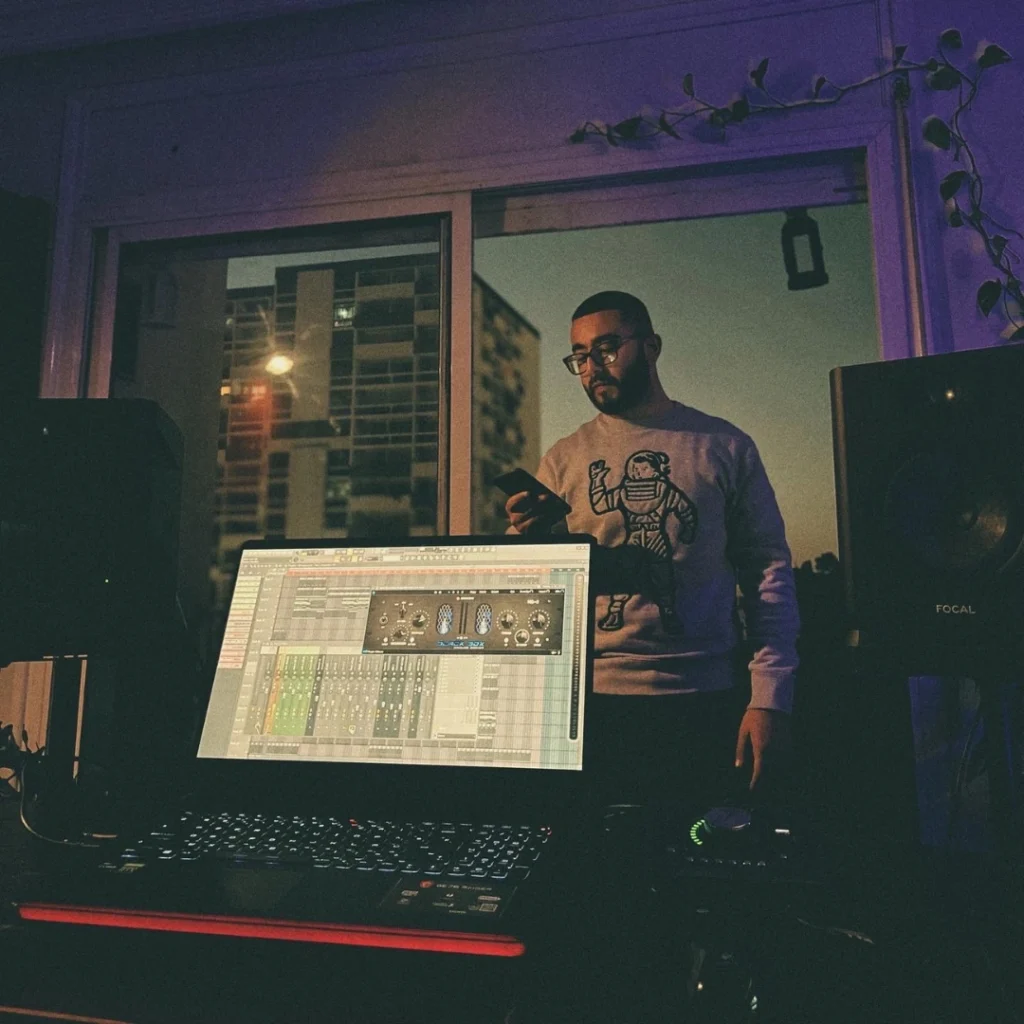
Asel officially moved from Oujda to Casablanca in 2019. When the COVID lockdowns hit in 2020, he was in the early stages of building his own recording studio, a major financial risk, especially away from his home city. “The lockdown was tough. It broke me,” he says. “Rent and no income, and not in my city.” Despite the setback, he managed to recover and continue building the studio and his network.
The post-pandemic period brought a new wave of creative direction. In 2023, he launched Friday Guest, a YouTube series showcasing emerging artists such as Yvzid, Clemando, Lord Mehdi, and Gustavo. The videos quickly went viral and “helped legitimize their careers when other rappers and producers saw that I trusted them and worked with them.”
He also expanded his portfolio as a mixing engineer, working on high-profile releases like ElGrandeToto’s banger “Mghayer”, Raid’s EP Ether, and later Stormy’s 2025 EP Omega, for which he handled mixing on “Ka3i” and recorded half the project in his Casablanca studio.
VIDEO: SALINA X Stormy, Khtek, Tagne, Abduh, 7liwa, Vargas, Ouenza, Figoshin, DollyPran, SmallX, Draganov | Yo Asel among the producers of this classic.
Philosophy of Sound: Innovation, Debate, and Visual Identity
For Asel, a good beat is not necessarily one that pleases everyone, it’s one that sparks conversation. “My best beat is what creates and starts discussions,” he explains. “I like to cause noise and debates.” This extends to his work on music videos, where he often includes “weird and new stuff” deliberately to provoke interpretation.
He believes the music scene naturally cycles through phases of saturation. Viral formulas get copied until they become dull. “That’s the moment to introduce something new,” he says, a principle evident in his collaboration with Draganov on “Psycho.” The track is built around a talkbox, a device rarely used in Moroccan rap, and its music video is directly inspired by the themes and aesthetic of the American TV series Severance, featuring a cast of prominent Moroccan actors like Meryam Zaimi, Adil Abatourab, Anass Basboussi, and Rabi Glim. “It went viral and sparked conversations about everything,” he says, “from the audio to the video. People were asking, ‘What does this symbol mean?’ or ‘Why is it like that?’”
As a producer who also cares deeply about visuals, he’s increasingly finding labels approaching him not just for beats, but for overseeing the entire production of music videos, a recognition of how closely his sonic and visual imagination are linked.
VIDEO: Yo Asel, Draganov & Abduh – REHAB (Official Music Video) | A project by Yo Asel
The Present: A Front-Facing Artist With a New Catalog
For much of his career, Asel stayed behind the scenes, “making beats, giving ideas and toplines, but not showing my face.” That changed in 2024, when he decided to step forward with his own artistic output. In this new phase, he released three tracks as a producer-artist:
- “Rehab” ft. Draganov & Abduh, (Apr 19, 2024)
- “Reform” ft. Anys & ValerieBlud, (May 17, 2025)
- “Red” ft. GelloGenius, Vira & Nada Azhari, (Jun 21, 2025)
For these releases, he dedicated substantial time to conceptualizing, developing narratives, and supervising music video shoots. “The whole package needs to be connected,” he says, emphasizing his long-standing passion for visual storytelling.
The studio he founded in Casablanca, launched officially post-Covid in 2021, now attracts artists across genres, “from Nada Azhari to Toto,” becoming a creative hub for Moroccan music.
Conclusion: A Producer in Full Evolution
From testing FL Studio on a cracked demo in Oujda to producing for North Africa’s biggest rap stars, resolving an international credit dispute, and pushing the sound of Moroccan hip-hop, Yo Asel embodies the trajectory of a generation that built its careers through persistence, digital curiosity, and cross-cultural listening.
He is now more than a producer behind the scenes: he is a curator, a mentor, a sound engineer, and increasingly, a front-facing artist building his own catalog. As he told us, “My best beat is the one that starts discussions.” In a culture reshaped by constant reinvention, Yo Asel remains one of the voices pushing those discussions into new terrain.
Written by:
Ben Tarki Moujahid
Listen to Yo Asel's music
Author
 View all posts
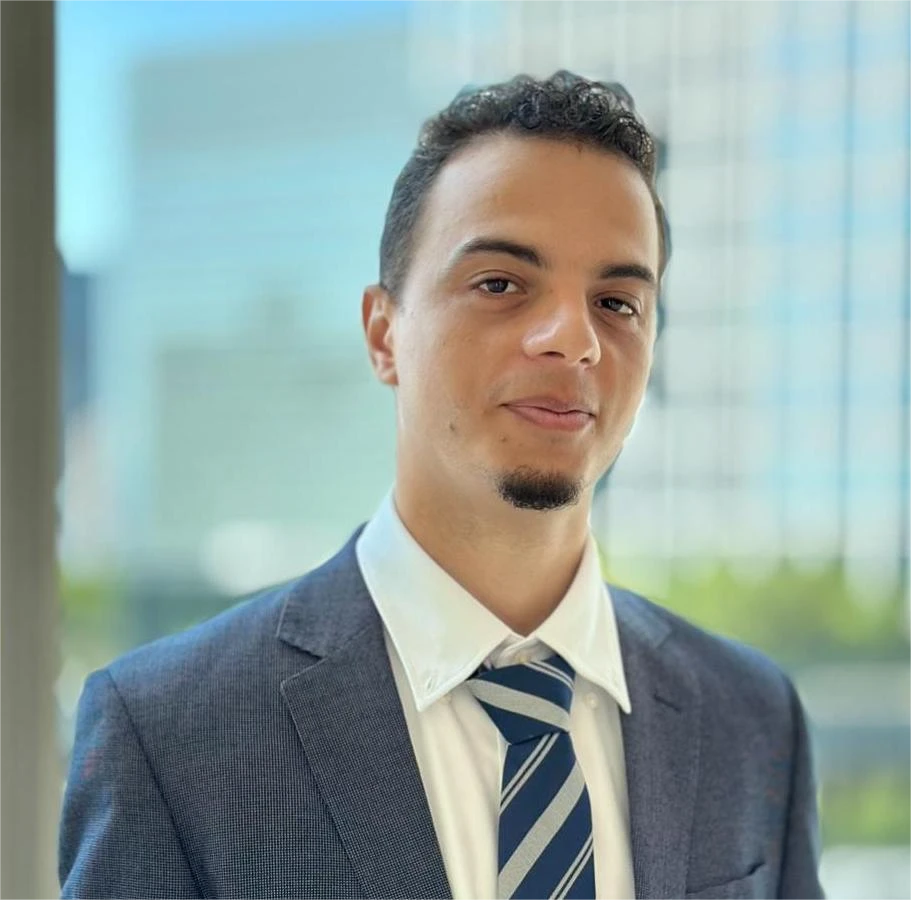
A music critic and a researcher, Moujahid writes in-depth articles analyzing Moroccan and global hip-hop, blending insights from industry experts into compelling, well-rounded critiques. Beyond writing, he plays a pivotal role in shaping the magazine's editorial vision, refining its tone, structure, and style to elevate the reader's experience. As the lead editor, Moujahid meticulously oversees and polishes nearly all published articles, ensuring the magazine maintains its reputation as a trusted and influential voice in music journalism.