French Montana’s Philanthropic History: Uganda, Morocco, Nigeria, and Addiction Recovery in the US
French Montana, (born Karim Kharbouch, 1984) has built a career defined by smash hits, platinum records and international collabs. Yet beyond the charts, he has quietly assembled one of the most substantial philanthropic portfolios in hip-hop. From helping expand a maternal health center in rural Uganda facility saving thousands of lives, to donating 500 boats to a floating community in Nigeria, to launching emergency relief efforts after Morocco’s devastating 2023 earthquake, Montana’s humanitarian work spans nations. In the United States, he has also entered the addiction-recovery space in the wake of Mac Miller’s death, partnering with healthcare providers to expand access to in-home detox and treatment services.
His initiatives have raised millions of dollars in fundraising, earned him the distinction of becoming the first rapper named a Global Citizen Ambassador, and led to formal recognition from organizations such as Pencils of Promise for his contributions to healthcare and education. What began with a music video trip to East Africa evolved into long-term partnerships with groups including Global Citizen, CARE, Mama Hope, Guardian Recovery Services, and NAQI Healthcare, turning celebrity visibility into sustained institutional collaboration.
This article focuses on philanthropic actions that have been publicly documented through reporting, organizational statements, and Montana’s own announcements.
VIDEO: Sean ‘Diddy’ Combs Praises a ‘Humble’ French Montana for His Philanthropy | Hip-hop mogul Sean “Diddy” Combs made sure the world knows about all Montana’s charity work in the U.S. and in Africa. by TheEllenShow
The Turning Point: “Unforgettable” and Uganda (2017–2018)
French Montana’s most significant and publicly documented philanthropic chapter began in 2017 during a trip to Uganda to film the music video for “Unforgettable” with Swae Lee. What was initially a creative project became a defining humanitarian pivot. While on the ground in eastern Uganda, Montana visited the Suubi Health Center, a small maternity clinic serving roughly 55 remote villages in the Budondo and Iganga districts.
The facility was severely under-resourced, operating without adequate equipment, blood storage capacity, or proper maternity infrastructure. Confronted with the realities of maternal healthcare shortages, Montana chose to intervene financially and publicly. He donated $100,000 of his own money to support the clinic’s expansion and launched the #Unforgettable Healthcare Campaign and #2BStrong Petition in partnership with Global Citizen and Mama Hope. The campaign focused on improving maternal and neonatal care, funding critical needs such as a blood bank, premature incubators, and additional medical supplies.
Montana then activated his network. The Weeknd matched his $100,000 contribution, enabling construction of the clinic’s first floor. Additional fundraising efforts, including support from Sean “Diddy” Combs ($200,000) and Global Citizen partners, helped transform the modest health center into a three-story facility. Follow-up reporting in 2018 confirmed the expanded hospital was operational and significantly increased in reach, with its annual patient capacity rising from approximately 56,000 to an estimated 260,000 people.
The Uganda initiative did not end with construction. Through ongoing advocacy campaigns tied to Global Citizen events and public fundraising drives, Montana became associated with broader maternal healthcare funding efforts in the country. By 2022, reporting tied to his campaigns cited more than $220 million raised toward improving maternal health services in Uganda, with significant support benefiting the Suubi “Hope” Health Center and related healthcare initiatives.
In 2018, Montana reinforced his commitment when he released a remix of “Famous” featuring Adam Levine and pledged all royalties from the track to support continued construction and water access improvements at the Suubi facility. At that point, his direct fundraising for the center had reached approximately $500,000. Construction updates described expansion of the main hospital block, antenatal wards, staff housing, sanitation facilities, and ongoing immunization efforts serving thousands monthly. He framed his motivation in personal terms: as an immigrant African, he said the lack of maternal healthcare access “should be a soft spot for anyone that has a mother or a child.”
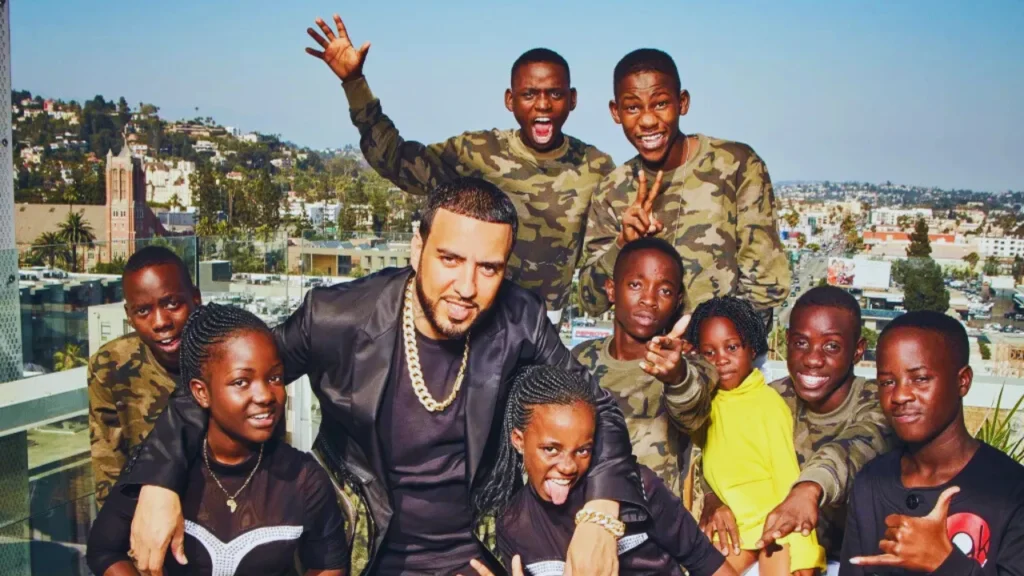
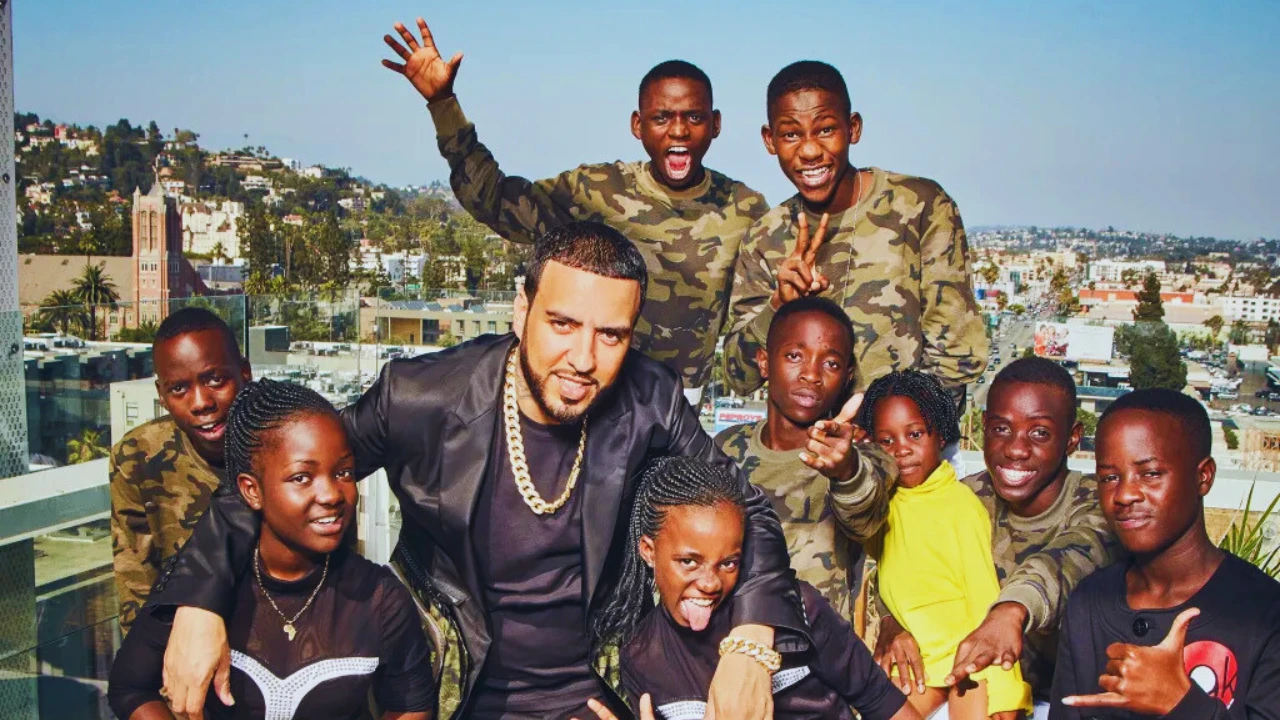
The Uganda chapter also extended beyond healthcare infrastructure. In interviews during the “Unforgettable” campaign, Montana stated that he brought members of the Triplets Ghetto Kids dance troupe featured in the video to the United States and committed to supporting their education, positioning the project as cultural exchange with long-term support rather than a one-time visual collaboration.
VIDEO: French Montana performs No Stylist at The Global Citizen Festival on Sept. 28, 2019 at Central Park in New York City. Hosted by Citi and Cisco | Global Citizen Festival NYC
Nigeria: Infrastructure in Makoko (2023)
In September 2023, French Montana expanded his philanthropic footprint in Africa to Nigeria following the filming of his “Wish U Well” music video with Swae Lee, Lojay, and Jess Glynne. While shooting in Lagos, he visited Makoko, a waterfront community sometimes referred to as the “Venice of Africa,” home to an estimated 200,000 residents living in stilted wooden structures above the Lagos Lagoon. Behind the nickname lies a community facing structural hardship. Makoko residents contend with chronic flooding, limited sanitation infrastructure, economic instability, and restricted mobility across waterways that shape daily life.
After meeting local leaders and witnessing conditions firsthand, Montana pledged to donate 500 wooden canoes to the community. Unlike symbolic imports, the boats were commissioned locally and built by Makoko craftsmen at a production rate of roughly six per week, ensuring that the initiative injected capital directly into the local economy. Completion was scheduled for December 2023. The boats serve multiple functions: transporting children to school, enabling commerce across waterways, improving access to markets and medical services, and strengthening day-to-day mobility. In a public statement, Montana explained his reasoning: “I witnessed firsthand how water is both a lifeline and an obstacle in Makoko. These boats are essential tools transporting the residents of Makoko and goods and services.”
He continued: “As an immigrant from Morocco, giving back to communities in Africa, the place that raised me is so important. When I was filming, I met local leaders who talked about the daily struggles and aspirations of the wider community. I was moved by their spirit and positivity, which inspired me to get involved and to help impact change”. Swae Lee, gamma., and SALXCO all contributed to the donation, replicating the networked philanthropy model first tested in Uganda.
VIDEO: French Montana on ‘Unforgettable’ & His Charity Work in Uganda | French Montana sits down with MTV News to discuss the success of his single, “Unforgettable” as well as his charity work in Uganda.
Morocco: Earthquake Relief and Investment in Education (2023)
In September 2023, a 6.9-magnitude earthquake struck Morocco, killing at least 2,901 people and injuring more than 5,500. For French Montana, born in Morocco before immigrating to the United States as a teenager, the disaster was personal. On September 12, 2023, while presenting the Best R&B award at the MTV Video Music Awards, he used the global broadcast to pivot toward relief efforts. On stage, he announced the launch of a Morocco Earthquake Emergency Relief Fund in partnership with Global Citizen and CARE and pledged an immediate $100,000 personal donation. The fund targeted urgent humanitarian needs including food, water, shelter, and medical assistance for displaced families.
His on-air remarks were brief but direct: he wanted to “spread some love and light to Morocco” while urging others to contribute. In the days that followed, he amplified calls for support through interviews and social media, using the visibility of award-season media cycles to drive attention toward recovery efforts. The earthquake response represented a different dimension of Montana’s philanthropy compared to Uganda or Nigeria. Rather than infrastructure development, it was rapid emergency mobilization, a crisis-response model activated within days of the disaster. It also underscored the through-line in his public identity: an immigrant artist maintaining active ties to his country of birth.
Beyond disaster relief, Montana has also funded education initiatives in Morocco. He financed the construction of two preschool classrooms in the Sabae neighborhood of Rabat, supplying books and infrastructure to support early childhood education. In interviews, he has spoken about educational gaps he witnessed growing up, arguing that many children lack access to foundational literacy. He has also expressed plans to eventually establish music schools in Morocco, framing education as both academic and creative empowerment.
VIDEO: French Montana Launches NAQI Healthcare, Goes Diamond With ‘Unforgettable’ | Montana is laser focused on helping addicts by providing them with the privacy and help they need to recover. by TMZ
Addiction Recovery, NAQI, and the Mac Miller Catalyst (2022)
Not all of French Montana’s philanthropy has been geographically tied to Africa. Some of it has been rooted in personal loss within the American music industry. In September 2022, on the fourth anniversary of Mac Miller’s death from an accidental overdose, Montana announced a partnership with Guardian Recovery Services and NAQI Healthcare to expand access to medically supervised, in-home detox and addiction treatment services. The initiative aimed to provide private, clinically managed recovery options for individuals struggling with substance use disorders, particularly those who may avoid traditional rehab settings due to stigma or public visibility.
Montana was explicit about the catalyst. Reflecting on losing Mac Miller, he described the toll addiction has taken within his circle: “When we lose one, it’s like near losing part of us.” He added that he had been thinking for years about how to contribute meaningfully in this space, and that Miller’s death pushed him to act. The issue was not abstract. In 2019, Montana himself had been hospitalized due to a combination of exhaustion and substance-related health concerns. He later spoke about committing to sobriety and reassessing his lifestyle. That personal experience informed his support for recovery services that emphasize discretion and comfort. As he explained, many people “want to stay private” while navigating treatment, and expanding in-home care could remove a barrier to seeking help.
The NAQI initiative also included a philanthropic component tied to the broader music community. Reporting on the partnership indicated that a percentage of profits would be donated to MusiCares, the Recording Academy–affiliated nonprofit that provides financial, medical, and addiction recovery assistance to music professionals. In this way, the program linked private healthcare delivery with institutional support structures for artists.
French Montana: Institutional Recognition and Advocacy Roles
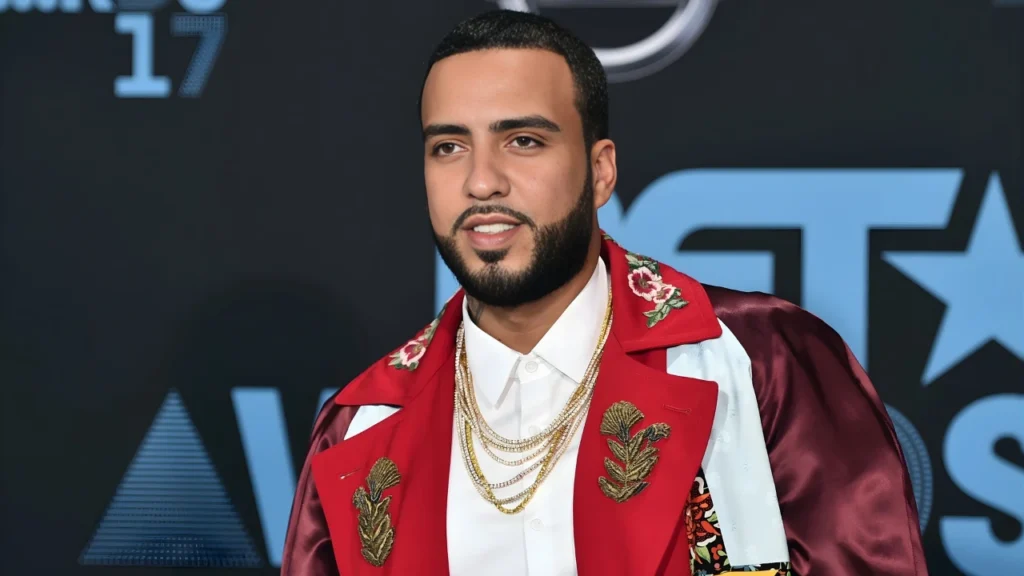
As French Montana’s philanthropic work expanded, it began to generate formal institutional recognition, not simply for isolated donations, but for sustained engagement. In January 2018, following his healthcare fundraising campaign in Uganda, Montana was named a Global Citizen Ambassador at a ceremony in New York City. The designation was widely reported as the first time the organization had awarded the title to a rapper. More than symbolic, the role positioned him as an ongoing advocacy partner in campaigns aimed at mobilizing public action and large-scale funding for global health and development initiatives.
Over the following years, the scale of the Uganda campaign became more clearly quantified. By 2022, reporting tied to his efforts cited more than $220 million raised toward improving maternal healthcare services in Uganda, with substantial benefit to the Suubi “Hope” Health Center and related programs. That cumulative impact was formally acknowledged in October 2022, when Montana received the Innovator Award for Humanitarian Efforts in Africa at the annual Pencils of Promise Gala.
The award citation emphasized the scale of healthcare funding associated with his campaigns. In his acceptance remarks, Montana framed the issue in rights-based terms: healthcare and education, he said, are fundamental human rights that should be accessible globally. He also reflected on the origin point of the Uganda project, noting that “we turned a hit into a way to touch peoples’ lives,” and that the song became truly meaningful when it connected music to tangible outcomes on the ground.
Beyond specific awards, Montana’s humanitarian work has been covered across international media. These moments reinforced a pattern: his philanthropic actions were increasingly viewed not as celebrity charity appearances, but as structured interventions tied to partnerships, infrastructure, and measurable outputs. The arc from donor to ambassador to award recipient illustrates a shift in perception. Rather than episodic generosity, Montana’s record began to resemble a sustained philanthropic track running parallel to his music career, one recognized by advocacy organizations, nonprofit institutions, and industry peers alike.
VIDEO: French Montana Is Rap’s First-Ever Global Citizen Ambassador | French Montana can now add Global Citizen Ambassador to his already stacked resume for his incredible efforts in Uganda. by TMZ
Conclusion: A Philanthropic Track Parallel to the Music
Across continents and causes, French Montana’s philanthropic record reveals a consistent pattern: convert visibility into infrastructure, crisis response, or access. In Uganda, a chart-topping single became a catalyst for maternal healthcare expansion. In Nigeria, a music video shoot translated into locally built transportation tools embedded in daily economic life. In Morocco, an award-show stage became a platform for emergency fundraising within days of a national disaster. In the United States, personal loss and lived experience led to partnerships aimed at expanding addiction recovery options and supporting musicians through institutional channels.
Importantly, Montana’s philanthropic narrative also mirrors his biography. As a Moroccan-born immigrant who built his career in the United States, his giving frequently connects Africa, North America, and the music industry itself. Over time, this body of work has positioned philanthropy not as a promotional accessory to his music career, but as an increasingly institutionalized parallel track.
To close this, I will quote how Montana described giving: “you will never experience giving or helping until you help someone that can do nothing for you. Cuz everybody that helped somebody cuz they can do something for you. When you help somebody that can do nothing for you, that’s when you be like ‘I helped somebody’”.
Written by:
Ben Tarki Moujahid
Author
 View all posts
A music critic and a researcher, Moujahid writes in-depth articles analyzing Moroccan and global hip-hop, blending insights from industry experts into compelling, well-rounded critiques. Beyond writing, he plays a pivotal role in shaping the magazine's editorial vision, refining its tone, structure, and style to elevate the reader's experience. As the lead editor, Moujahid meticulously oversees and polishes nearly all published articles, ensuring the magazine maintains its reputation as a trusted and influential voice in music journalism.