The Disciple: Cilvaringz Finally Tells His Story
Few figures in hip-hop have moved as quietly and decisively as Cilvaringz. As the first non-American affiliate of the Wu-Tang Clan and the architect behind Once Upon a Time in Shaolin – the most expensive work of music ever sold – he has spent decades as a behind-the-scenes power broker, negotiating high-stakes deals from North Africa to North America. His trajectory cuts across continents and roles: rapper, producer, strategist, manager, and cultural engineer. From a chaotic freestyle moment on a stage in Amsterdam to seeing his work exhibited at high-art museums.
In a conversation with DimaTOP, Cilvaringz opens up about his improbable entry into the Wu-Tang inner circle, the philosophy and secrecy behind Once Upon a Time in Shaolin, and his evolution from performer to industry veteran. We also discuss the Oscar-winning pedigree behind his new documentary, The Disciple, and why this Sundance-bound film may be the most honest chapter of his journey yet.
Wu-Tang Clan: From Fan to First Non-American Affiliate
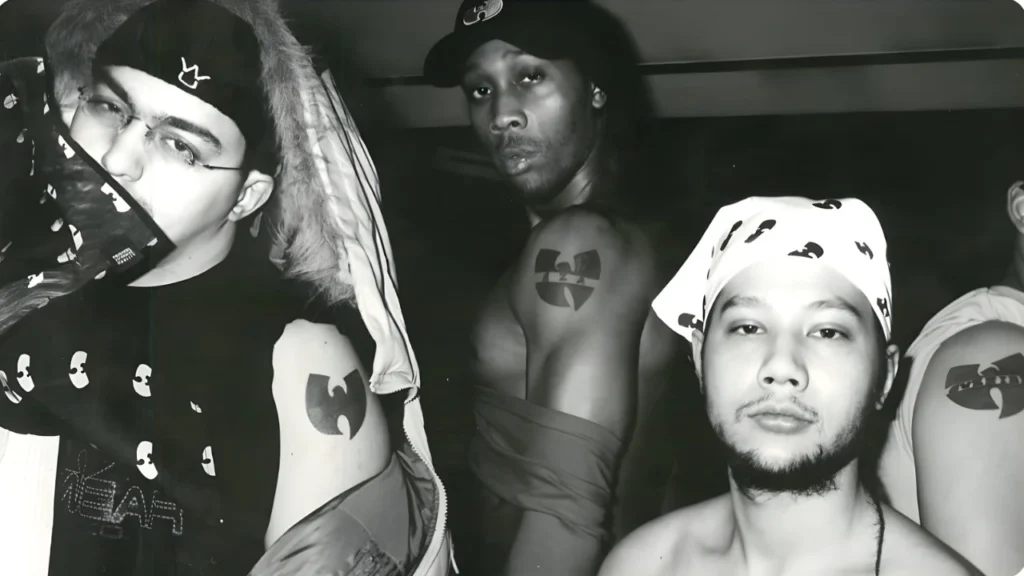
The story begins in Amsterdam, 1997, at a Wu-Tang Clan showcase that would quietly alter the course of hip-hop history. That night, members of the group invited fans onto the stage to freestyle. Dozens rushed forward. Cilvaringz rushed too to take the chance. When Cilvaringz finally grabbed the mic and delivered his verse, something landed and they liked him. On the side of the stage, a brief conversation with RZA followed. There was no contract signed that night, only a flickering suggestion of potential. But as security intervened to clear the surging crowd, the connection was severed and contact was lost.
Most would have viewed that night as a “once-in-a-lifetime” story to tell at bars, but Cilvaringz viewed it as an opening. Over the next two years, he traveled from the Netherlands to New York five separate times, searching for the group in the heart of their own territory. Not just to meet them again, but to be part of what now is recognized as the most iconic hip-hop group ever formed. Walking through the city, he saw the Wu logo everywhere, on walls and clothes, embedded in the culture of New York. The scale of Wu-Tang’s dominance hit him in full.
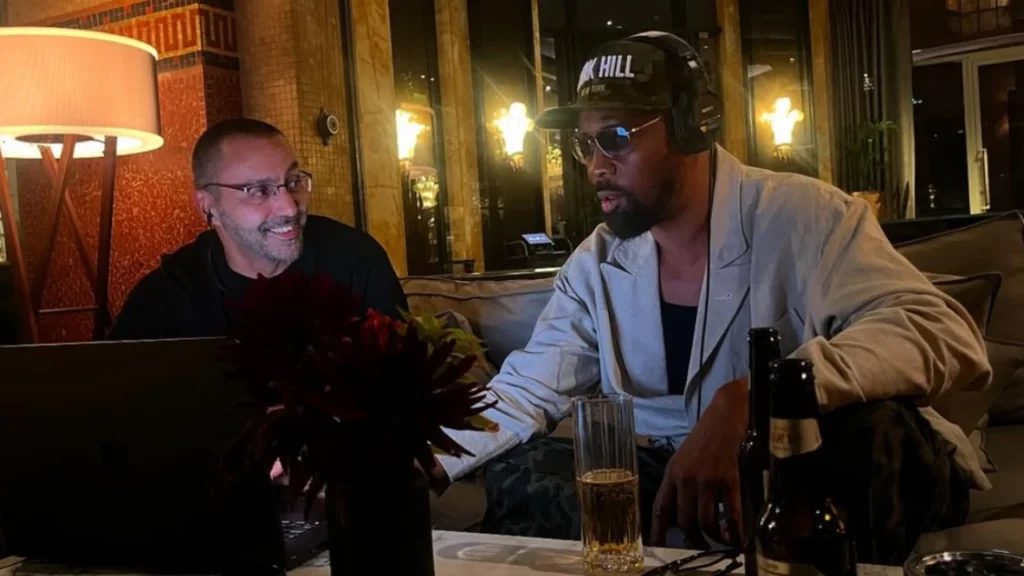
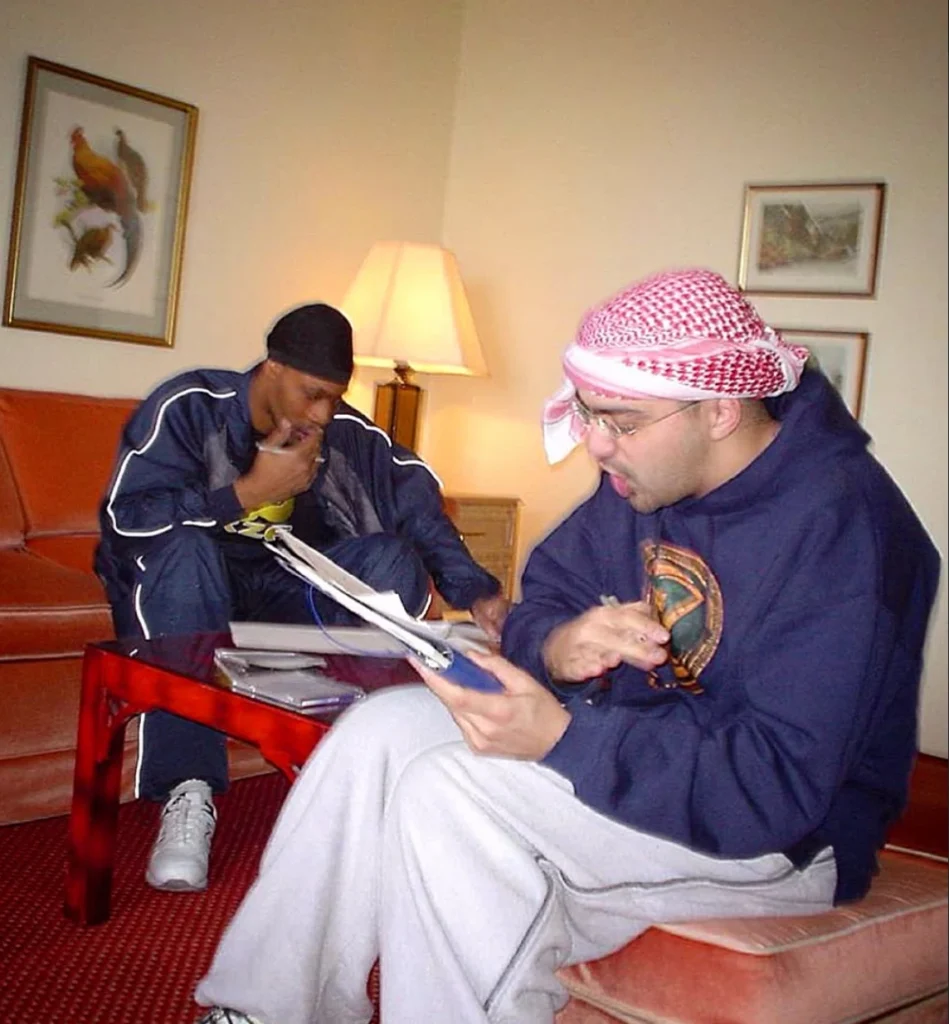
That relentless persistence, the attitude of a true disciple, eventually paid off. By 1999, Cilvaringz officially entered the Wu-Tang universe, becoming the first non-American affiliate in the group’s history, part of what’s known as the Wu-Tang Killa Beez. In a collective famously rooted in Staten Island mythology and internal logic, his entry was significant. At the center of this brotherhood was RZA. “RZA walked me through production and the architecture of music,” he says. “I’m writing my memoir now called FanBoy,” he reveals. “That’s what the Wu-Tang used to call me, to kinda diss me for my connection with RZA, him being a mentor figure to me,” he adds. It was this connection and trust that would eventually allow Cilvaringz to orchestrate the most guarded project in hip-hop history.
VIDEO: Manal – Taj (Official Music Video) | منال – تاج (فيديو كليب) | Directed by Cilvaringz, uploaded on Feb 14, 2018.
Tarik to Cilvaringz: Artist Manager’s Impact in Morocco and Beyond
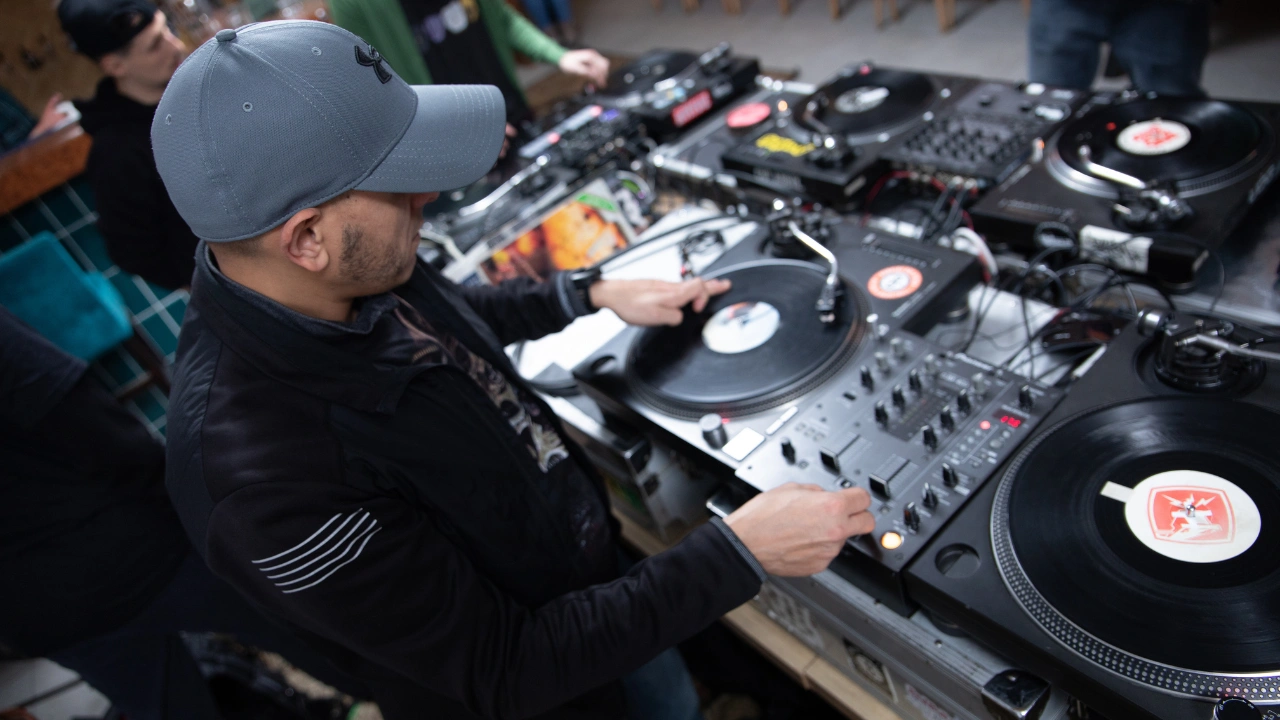
Before he was a strategist, Cilvaringz was a performer. Born Tarik Azzougarh in the Netherlands to Moroccan parents, he began rapping as a teenager, eventually serving as the opening act for the Wu-Tang Clan throughout the 2000s. “I booked the biggest hip-hop tour in the world back then, around 2003-2004,” he recalls. “It covered 67 countries.” Over time, he expanded his expertise into every aspect of music creation. “Out of necessity, I learned everything,” he says, “from music producing to the business side of contracts and negotiations.” Recognizing how easily artists could be exploited by contracts they didn’t understand, Cilvaringz spent his time off-stage immersing himself in entertainment law, rights management, and the brutal mechanics of industry negotiations.
This evolution from rapper to architect found its most significant testing ground in Morocco. Throughout this evolution, Morocco remained a constant. His connection to his heritage and country is deep. He travels there frequently (during our conversation, he was dialed in from Marrakech), stayed deeply engaged with the hip-hop community, and by mid-2000s had become an active presence within its developing music ecosystem. His impact is visible in both infrastructure and outcomes: from music videos to record deals, from big budgets to pathways that linked Moroccan artists to global systems.
He worked directly as the manager for rapper Salah Edin and pop star Manal, securing a major deal for the latter. “With Manal, I negotiated a six-figure deal with Sony Music Middle East,” he notes. “It was a significant deal for that time, before Spotify even entered Morocco. She had invested $10,000 of her mother’s money to get on the radar. I directed the music videos for ‘Taj’ and ‘Nah’ and we spent like $50,000. You know, sometimes you have to invest to get the attention of labels and brands.” The bet paid off as “Taj” is credited as the project that skyrocketed Manal to fame.
Beyond long-term management, Cilvaringz acted as a strategic power broker for the scene’s most influential names. He managed the group Fnaire for three months, producing their music video “Yed El Henna“, and handled business negotiations for Shayfeen’s live performances. His reach also included securing some recording deals for rap star ElGrandeToto and orchestrating the Def Jam deal for rapper Issam in its entirety, reported as one of the biggest deals for a North African hip-hop act at the time (2019).
Cilvaringz negotiated opportunities and defended artists across North America and Europe. A key instance was his legal advocacy for producer Yo Asel, for whom Cilvaringz retained a lawyer to secure credit and compensation for the beat on French Montana’s hit “Lockjaw” (feat. Kodak Black), resulting in a confidential settlement. “Asel had a strong case; he just didn’t have the means to fight it,” he explains. It was this mastery of the system that gave him the leverage to later protect the Wu-Tang legacy on a global scale.
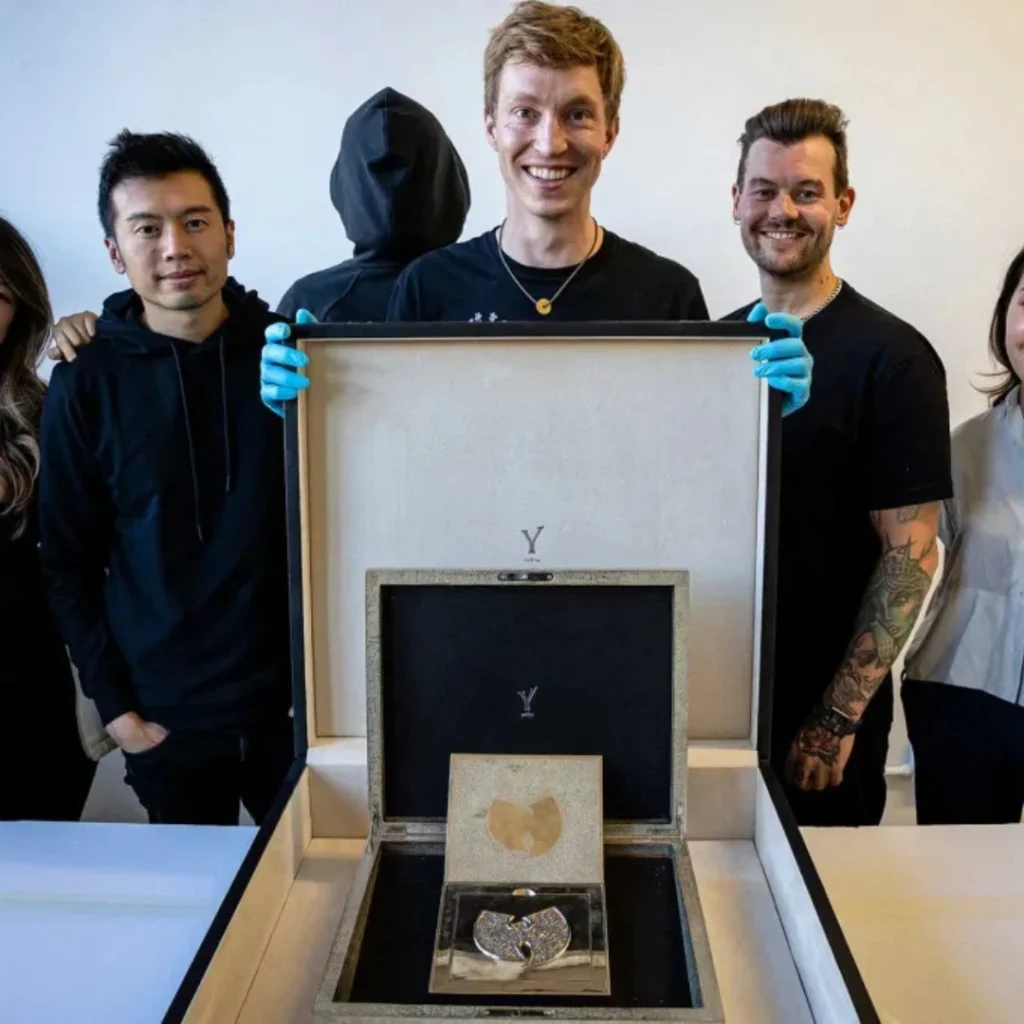
Once Upon a Time in Shaolin: The Most Expensive Album Ever Made
The clearest expression of Cilvaringz’s philosophy manifested in the form of Once Upon a Time in Shaolin. Conceived between 2007 and 2008 and developed under the patronage of RZA, the project was a radical reaction to the steady devaluation of recorded music. In an era where streaming, piracy, and digital abundance had rendered music a disposable commodity, Cilvaringz sought to restore its weight. “listening to music doesn’t hit the same way it used to,” he explains, “and streams pay artists nothing but everything costs more to make.”
The production was a masterclass of clandestine logistics. Recorded in total secrecy between 2008 and 2013, the circle of trust was microscopic: only Cilvaringz, RZA, and their advisor knew the true nature of the project. Even the members of the Wu-Tang Clan recorded their contributions without realizing they were part of a “one-of-one” work. This was not an act of deception, but a necessary methodology as Cilvaringz explained; the conceptual purity of the project could not have survived public exposure.
Released in 2015 as a single physical copy encased in a hand-carved silver box (designed by British-Moroccan Yahya), Once Upon a Time in Shaolin became the most expensive work of music ever sold. Its record-breaking $2 million auction forced the global music industry to confront questions about value, ownership, and access. The album was later exhibited at the Museum of Old and New Art (MONA) in Australia, an institution known for audacious curatorial decisions that blur art, provocation, and ritual. There, controlled listening parties allowed a few hundred people to hear portions of the work, reinforcing the idea that access itself was part of the artwork.
VIDEO: Cilvaringz – The World Tour Documentary | Reported to be the largest hip-hop tour back then. Uploaded on YT on Aug 17, 2006.
The Disciple: From Behind the Scenes to the Big Screens
All of these narrative threads – the relentless fan, the legal protector, and the high-art architect – finally converge in The Disciple. Directed by Oscar-winning filmmaker Joanna Natasegara (The White Helmets), the documentary represents a rare role reversal: for the first time, Cilvaringz is the subject of the story rather than its creator. The title itself, picked by Natasegara, is a deliberate nod to his identity as a devoted student of both the Wu-Tang Clan and the core tenets of hip-hop culture.
The film, which runs for 105 minutes, is structured around Cilvaringz addressing his journey head-on. It traces a staggering trajectory, from a teenage fan in the Netherlands to the mastermind behind one of the most legendary and guarded artistic ventures in history.
The industry anticipation is already palpable. The Disciple is set to premiere on January 23 as an opening-night selection at the Sundance Film Festival, screening on the festival’s most prestigious stage.
Conclusion: What are We Willing to Fight for Art?
In an industry obsessed with “the now”, with viral metrics, algorithmic speed, and the frantic pursuit of visibility, Cilvaringz has spent three decades moving in the opposite direction. His career has not been a search for celebrity, but a quest for weight. His work has functioned as an uncomfortable question: What is music worth when it can no longer be ignored or deleted?
The Disciple invites us to finally look behind the curtain at the architecture beneath the legend. It is a portrait of a man who realized that the most powerful positions are often those held by people who never seek the center of the frame. As he moves from the shadows of the recording booth to the bright lights of Sundance, the narrative shifts from the history of a fan to the testament of an orchestrator.
Cilvaringz’s journey serves as a reminder that loyalty to a craft, and the patience to protect it, can create something timeless. The film isn’t just his story; it is a mirror held up to our own beliefs about what we value, what we own, and what we are willing to fight for in the name of art.
Written by:
Ben Tarki Moujahid
Author
 View all posts
A music critic and a researcher, Moujahid writes in-depth articles analyzing Moroccan and global hip-hop, blending insights from industry experts into compelling, well-rounded critiques. Beyond writing, he plays a pivotal role in shaping the magazine's editorial vision, refining its tone, structure, and style to elevate the reader's experience. As the lead editor, Moujahid meticulously oversees and polishes nearly all published articles, ensuring the magazine maintains its reputation as a trusted and influential voice in music journalism.