

Ali: The Maghrib Diaspora's Impact on French Hip-Hop
This article explores the seminal impact of Ali (Yassine Sekkoumi), a pivotal figure in French hip-hop whose work, particularly as half of the duo Lunatic, changed the genre and cemented his legacy in the French rap scene. As a Moroccan-French rapper, Ali introduced themes, lyrical complexity, and production aesthetics from his faith and life that laid the groundwork for a new generation of artists.
This piece is part of an ongoing series dedicated to highlighting the worldwide contributions of our diaspora, many of whom remain underrepresented in global narratives. We recognize that people from North Africa are often unfairly portrayed in European media, with a disproportionate focus on a small minority involved in crime, thereby overlooking the monumental contributions made by the majority to culture, sports, science, politics, and all facets of society.
As a magazine committed primarily to covering hip-hop music, we are proud to dedicate this series to exploring the profound and enduring impact of the Maghrib diaspora on the genre, starting with the legacy of Ali.
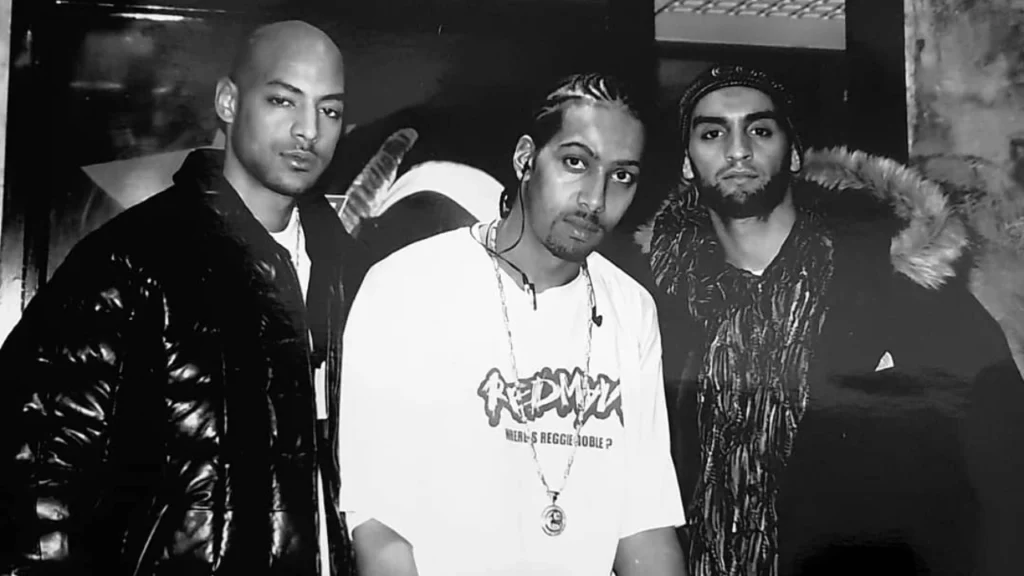
Who is Ali: Roots and Identity
Ali (Yassine Sekkoumi, b. 1975) was born in Paris to Moroccan parents and raised in the suburb of Issy-les-Moulineaux. He developed a deep immersion in hip-hop during his adolescence, initially performing under the moniker Daddy Ali. His entry into the French rap underground was formalized in 1994 when he connected with Booba to form the duo Lunatic. This partnership marked the start of a journey that would fundamentally alter the landscape of French rap.
Following the duo’s split in 2003 due to internal conflicts, Ali launched his solo career. His debut album, Chaos et Harmonie (2005), released in collaboration with 45 Scientific, earned critical acclaim for its poetic depth and thoughtful content, though its commercial success was modest, selling around 20,000 units. Subsequent releases, such as Que la Paix Soit sur Vous (2015), revisited themes of faith and identity, maintaining his reputation for profound lyricism. His overall output has collectively amassed over 1 billion streams, demonstrating an enduring connection with his audience, despite limited mainstream charting.
VIDEO: Ali : « Y’en a qui sont dans la musique avec la religion du Diable…» | Ali talks about his philosophy of making music.
The Seminal Album: Mauvais Œil
The cornerstone of Ali’s discography and a foundational work of French rap is Lunatic’s only studio album, Mauvais Œil (French for Evil Eye). Released in October 2000 on the independent label 45 Scientific after facing rejection from several major labels, the album immediately made history. It peaked at number 8 on the SNEP charts and was certified gold after just eight months, becoming the first independent French album to achieve this distinction. The album went on to sell over 160,000 copies.
The album is universally considered among the greatest in French rap. Critics point to its distinct aesthetic as a major turning point: its sombre, Queensbridge-inspired sound introduced East Coast influences, particularly Mobb Deep and the Wu-Tang Clan, into the French lexicon. This marked a distinct shift away from the overtly political rap of the 1990s toward a colder, more confrontational street rap characterized by raw street imagery and hardcore punchlines.
A key element of the album’s strength was the contrast between the two artists. While Booba delivered a street-heavy style, Ali provided the introspective, philosophically and/or spiritually inflected lyrics, a pairing that significantly expanded the thematic scope of French rap. Nekfeu, describing the album, said “there isn’t a single track to skip” while Benjamin Biolay likened it to “reading Dostoevsky in prison.” As critic dymE put it, “what makes Mauvais Œil a classic” is the blend of “hardcore of an angry, recently released Booba [from prison] with the conscience, mysticism, and wisdom of Ali” creating “a finely crafted and perfectly fitting duality.”
The enduring quality of Lunatic’s music is recognized by historians and critics as it is among the top-rated French rap albums. From the 14-track album, five tracks were included in the Abcdr du Son’s list of “100 Classics of French Rap,” with ‘Pas l’temps Pour les Regrets’ ranked 6th overall. Furthermore, Lunatic’s 1996 non-album track, ‘Le Crime Paie’, was selected as the 2nd classic rap song ever, placing it second only to IAM’s iconic song ‘Demain C’est Loin’ (1997). This collective recognition underscores Ali and Lunatic’s pivotal role in shaping the genre’s golden era.
VIDEO: Lunatic – Pas L’Temps Pour Les Regrets clip officiel | Ranked 6th classic song of all time by Abcdr du Son.
Fingerprint: Ali’s Impact on the French Scene
Ali’s influence on the French and broader francophone rap scenes is profound, acting as both a pioneer and a mentor. As a cornerstone of early 2000s French hip-hop, Ali’s contribution lies primarily in the technical elevation of the art form: he was instrumental in revolutionizing flow and technical rhyme schemes through Lunatic, providing a blueprint for later artists. His work elevated the banlieue/suburban narratives, focusing on themes of immigrant alienation and deeper reflection. Moreover, his work with collectives like 92i and Time Bomb helped to democratize access to the rap industry for suburban artists.
Ali and Lunatic are continuously cited as a “foundational work” and a duo that “defined a new era for French hip-hop.” Mainstream press, such as Les Inrockuptibles, list Mauvais Œil among the records that “changed the face of French rap,” with artists like Nekfeu calling it the “definition of a classic.” Ali’s solo career maintained the respect of a loyal fanbase and peers, lauded for his lyricism and thoughtful themes.
His solo emphasis on Islam and cultural reconciliation particularly influenced a generation of conscious rappers like Youssoupha. The duo’s legacy is actively embraced by younger artists; the rapper Guizmo cited Lunatic as an early influence, and Dinos’s 2022 collaboration with Ali was framed by commentators as an explicit tribute to Lunatic’s foundational role. This underscores Ali’s enduring relevance in shaping the artistic formation of the next generation.
Ali’s ultimate contribution is his cementing of rap’s evolution in the francophone world from cultural mimicry to a powerful vehicle for cultural assertion, defining the standards for lyrical insurgency and duo dynamics that inspired scenes well beyond France.
Written by:
Ben Tarki Moujahid
Author
 View all posts
A music critic and a researcher, Moujahid writes in-depth articles analyzing Moroccan and global hip-hop, blending insights from industry experts into compelling, well-rounded critiques. Beyond writing, he plays a pivotal role in shaping the magazine's editorial vision, refining its tone, structure, and style to elevate the reader's experience. As the lead editor, Moujahid meticulously oversees and polishes nearly all published articles, ensuring the magazine maintains its reputation as a trusted and influential voice in music journalism.