Our Diaspora: YP on American Influences and Moroccan Rap’s Rise
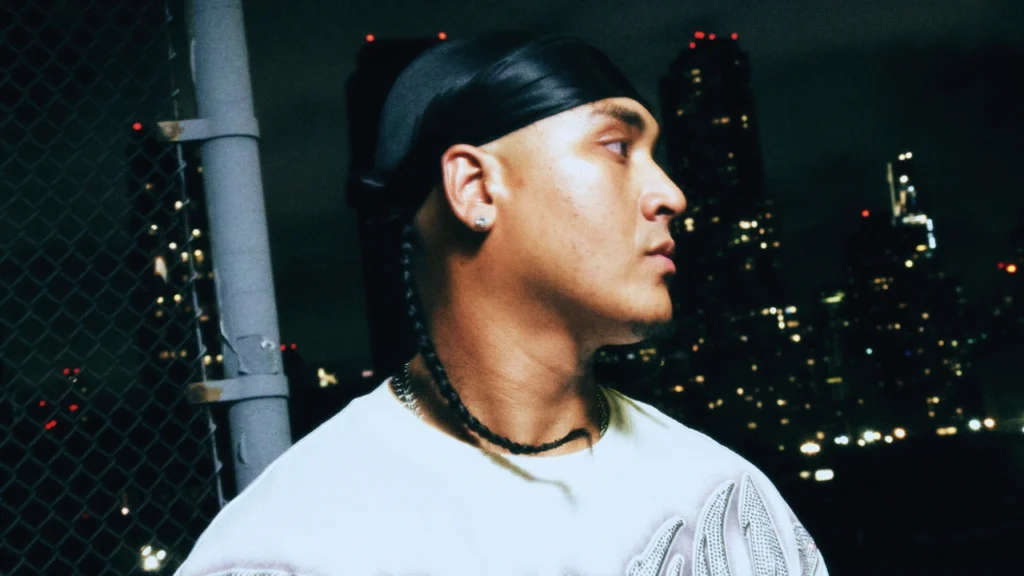
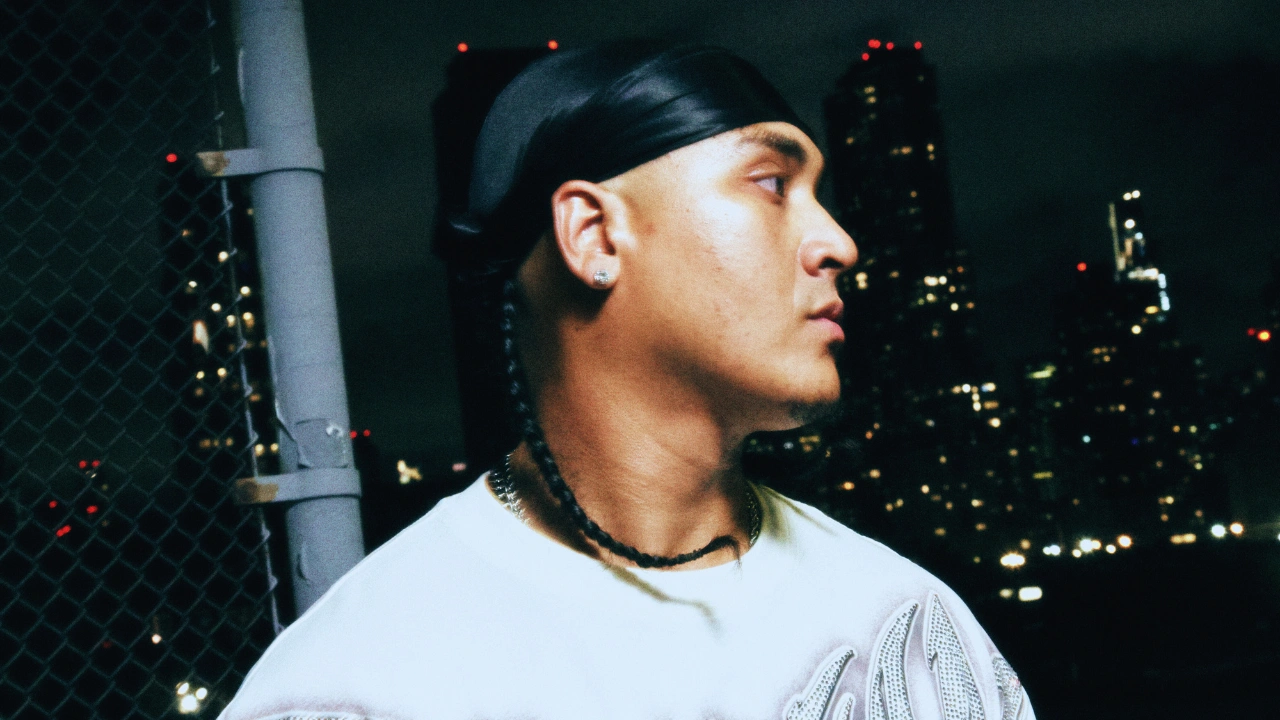
Omar, known professionally as YP, carries Morocco, the Philippines, and the United States in one body. Born and raised in New Jersey to a Moroccan father and Filipina mother, he grew up in a space where cultures overlapped constantly. YP learned early that his story didn’t fit neatly into a box. He proudly says, “I’ve always felt I am Moroccan and American, never just one.”
His path into hip-hop came early, starting with poetry scribbled in notebooks, moving into high school cyphers and local shows, and slowly expanding into a cross-Atlantic career that now has him firmly plugged into Morocco’s rap ecosystem while staying rooted in his East Coast sensibilities.
In a conversation with DimaTOP, YP opened up about growing up Moroccan-Filipino American in New Jersey, his deepening connection to Morocco’s language and hip-hop culture, the evolution of Moroccan rap at home and in Europe and his work on projects like the Norf Tape.
YP on the Meaning of his Alias: 2Pac’s Impact
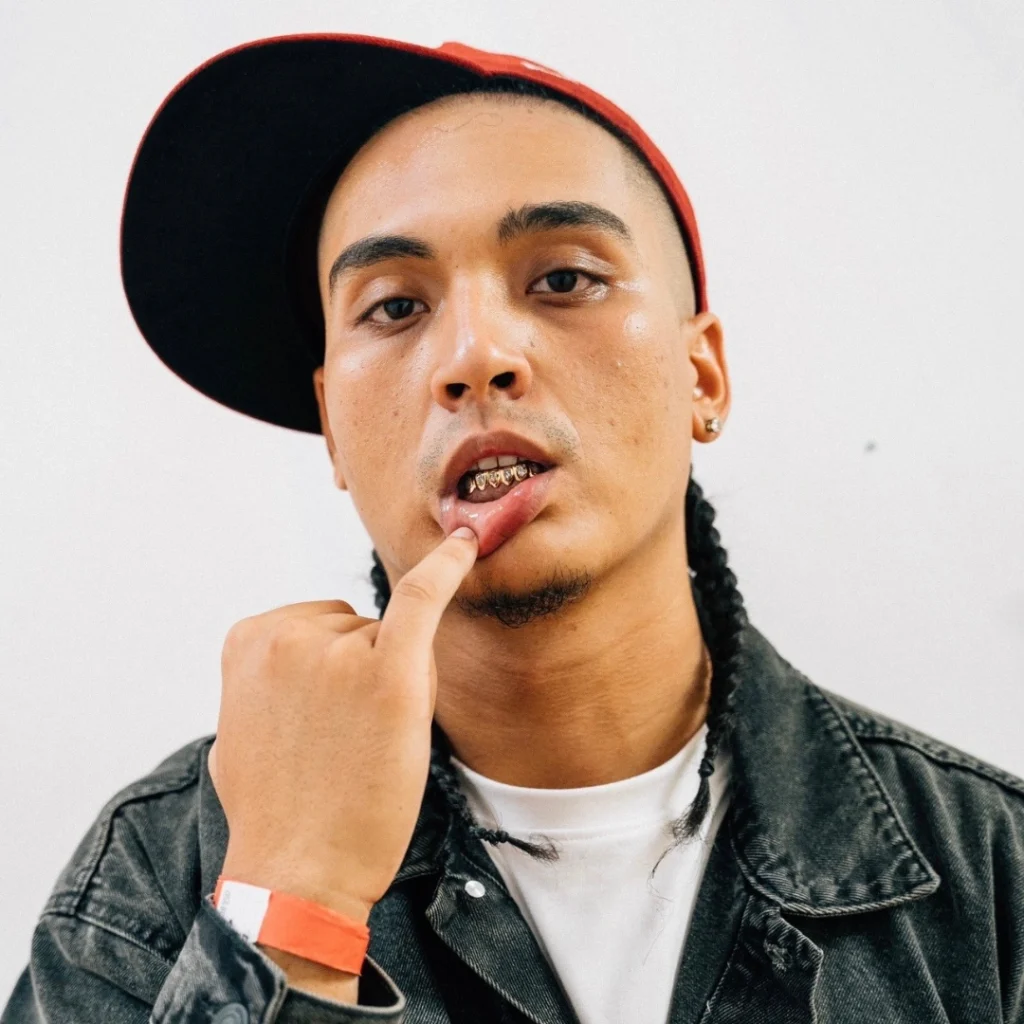
The name “YP” came from a line that stuck with him as a teenager. “My first name ever was Product of the Poison,” he says, after hearing it in 2Pac’s lyric in ‘So Many Tears’ (1995). That phrase, heavy with the contradictions of survival and environment, resonated deeply. Over time, “Product of the Poison” shortened into “Young Product,” and eventually became simply YP.
That attraction to words, layers, and emotional weight showed up early. “Around the age of 12 or 13, I picked up a pen for the first time just to get stuff off my chest,” he recalls. It wasn’t rap yet, it was poetry. “It was more personal, more about clearing my head.” It wasn’t until high school; beatboxing in hallways, tapping rhythms on desks, that poetry found its way onto a beat. The shift felt natural, driven by the social electricity of teenage creativity.
VIDEO: YP, KRAZE DELAROSA & NORFAFRICA – RYUK (OFFICIAL MUSIC VIDEO) | Uploaded on Nov 1, 2025
YP on his Moroccan Roots and American Upbringing
YP’s cultural foundation was built inside a household that held multiple worlds at once. His father, who came to the United States through an art scholarship to study sculpting and graphic design, kept Morocco alive through stories, summers abroad, and strong family ties. “My father made a real effort to keep me grounded in my roots and culture,” YP explains. “When I go to Morocco, I go to see family,” he adds, “I get to connect deeper with the culture.”
Language plays a decisive role. Moroccan Darija, the everyday Arabic dialect spoken in Morocco, was something he learned out of necessity. As he puts it, “language puts you deeper in the culture. I had to learn Darija to speak to my grandparents, my cousins, my uncles.” Since childhood, “all summers, I’d spend at least a month in Morocco,” he says. Those seasons weren’t vacations in the tourist sense; they were slow immersions into neighborhood life, language, and extended family.
YP on his Beginnings and Opening for Joey Bada$$
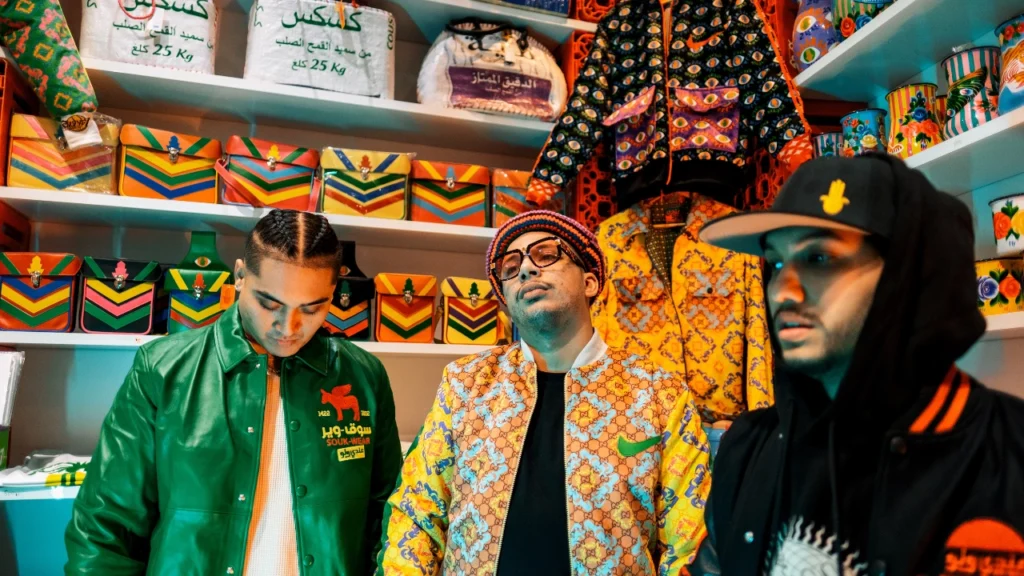
Before Morocco entered fully into his music career, New Jersey shaped his earliest steps as a performer. In high school, he became part of a rap group. They were performing wherever they could, learning how to move crowds in real time. The biggest early milestone came when they opened for Joey Bada$$.
His influences were mostly New York and New Jersey. “Some of my influences are Jay-Z, Nas, Mase and Redman,” he explains. While 2Pac remains his favorite rapper, he sees his stylistic DNA grounded in the East. That blend, West Coast message with East Coast framing, would later line up unexpectedly with what he found in Moroccan rap.
VIDEO: Small X, YP, Di-Meh, Norfafrica – OK | Uploaded on Mar 6, 2024
YP on Moroccan Hip-Hop as Love: From Muslim to Dizzy DROS
For a long time, his Morocco experience was mostly centered around Tetouan, where most of his family lives. Over the past 5-7 years, however, his travels widened across the country as his music career took shape. Those journeys shifted Morocco from just family environment into also a creative arena.
YP’s first introduction to Moroccan rap came through Muslim, the legendary Tangier MC whose work helped define socially conscious hip-hop in northern Morocco. But it was Dizzy DROS’ 2013 album 3azzy 3ando Stylo that fully connected the dots. “That was a game changer,” YP says. “It sounded like American hip-hop, them West Coast vibes, but in a Moroccan way. I heard my two identities in one project. That album is an absolute classic.” Hearing American-inspired rap delivered through Moroccan dialect and cadence was inspiring for YP.
His first Morocco-shot video in 2017 triggered a chain reaction. Through IM Beats, YP began to receive more attention with the pivot in visuals. He loves how Moroccans respond to diaspora pride, “when Moroccans see the diaspora proud of their roots, they show us true love.” That same pathway led him to collaborate with different rappers from Northern Morocco, like Ali Ssamid, with whom he released “VIBE” in 2019, and “44” with KDK the same year. From there, YP’s connection with the Moroccan rap scene kept getting deeper. “[rappers] 8ird, Loun, Small X, and DROS are the homies,” he says. “They allowed me into their space. It’s love first, then music second.”
Today, YP is managed by Tayze, an architect of Moroccan rap’s international rise. “I wasn’t expecting to get this far and deep in the Moroccan hip-hop scene,” he admits. “It’s an honor.”
YP on European and American Hip Hop: Similarities & Differences
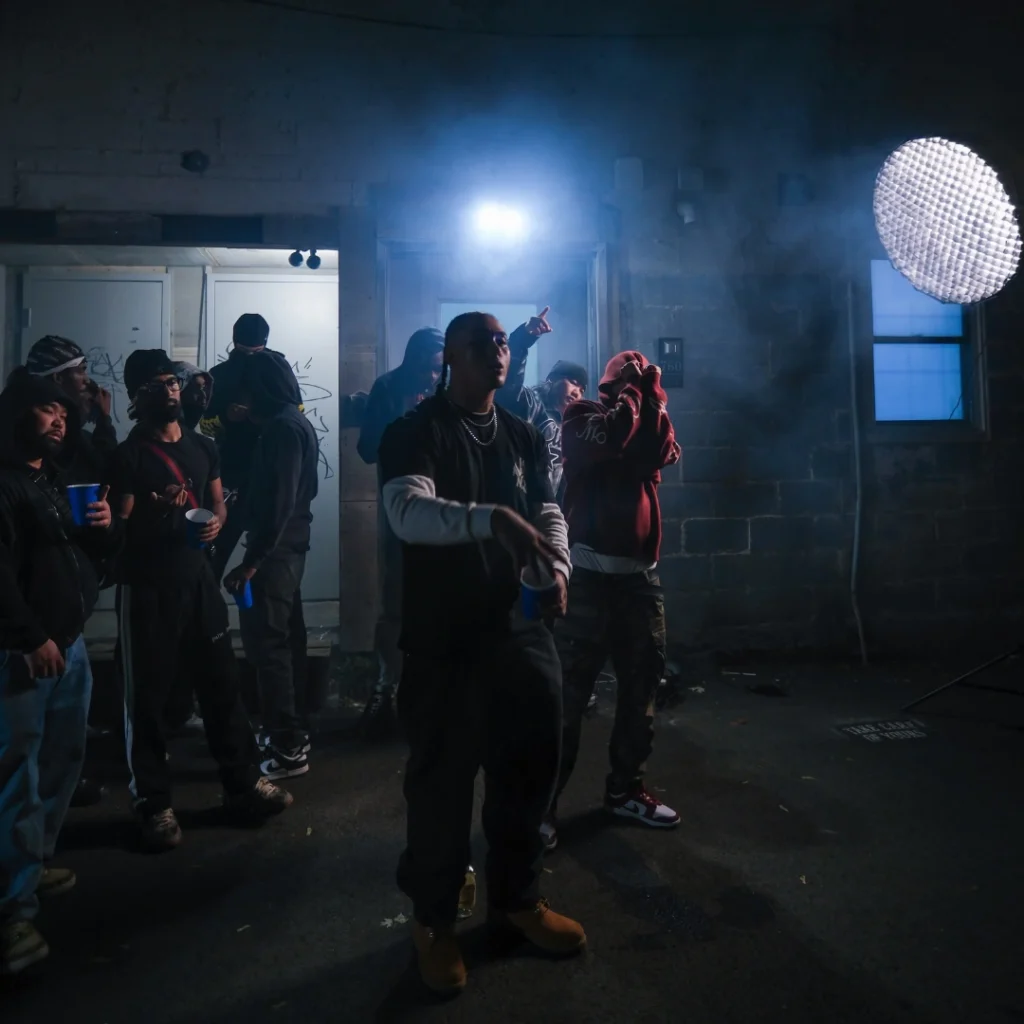
When comparing Morocco and the U.S., YP doesn’t frame one as superior, but different engines. “Both are trendsetters,” he says, offering respect in both directions. What sets Morocco apart, in his view, is linguistic flexibility. “Moroccan accent is very smooth. Rappers can switch between many languages easily, that helps a lot.” This code-switching between Darija, Amazigh, French, Spanish, and English has helped Moroccan rap travel faster across Europe than many other regional scenes. Artists like ElGrandeToto exemplify that. “We can agree that EGT has made a way in penetrating Europe,” YP says.
Production standards have also changed rapidly. “Seven years ago, the difference was massive. Now, especially with access to equipment moving fast, most people who take music seriously have great setups in Morocco.” The industry’s youth shapes its social dynamics too. “It’s easier to link up in Morocco. You see someone in a studio, you chop it up naturally.” In the U.S., distance and sprawl fragment interaction. Morocco’s rap hubs compress that distance. “People are still hungry to get it,” he adds.
For YP, Moroccan hip-hop also announces itself visually. He gravitates toward videos that look unmistakably Moroccan without overperforming tradition. He cites Abduh’s “FTA” as an example, shot inside the derb (the inner neighborhood). “It’s the houma, the derb, the zenka,” he says. “It’s about the setting. It has the Moroccan touch but the essence is still hip hop.”
YP on Music: Creating Without Counting
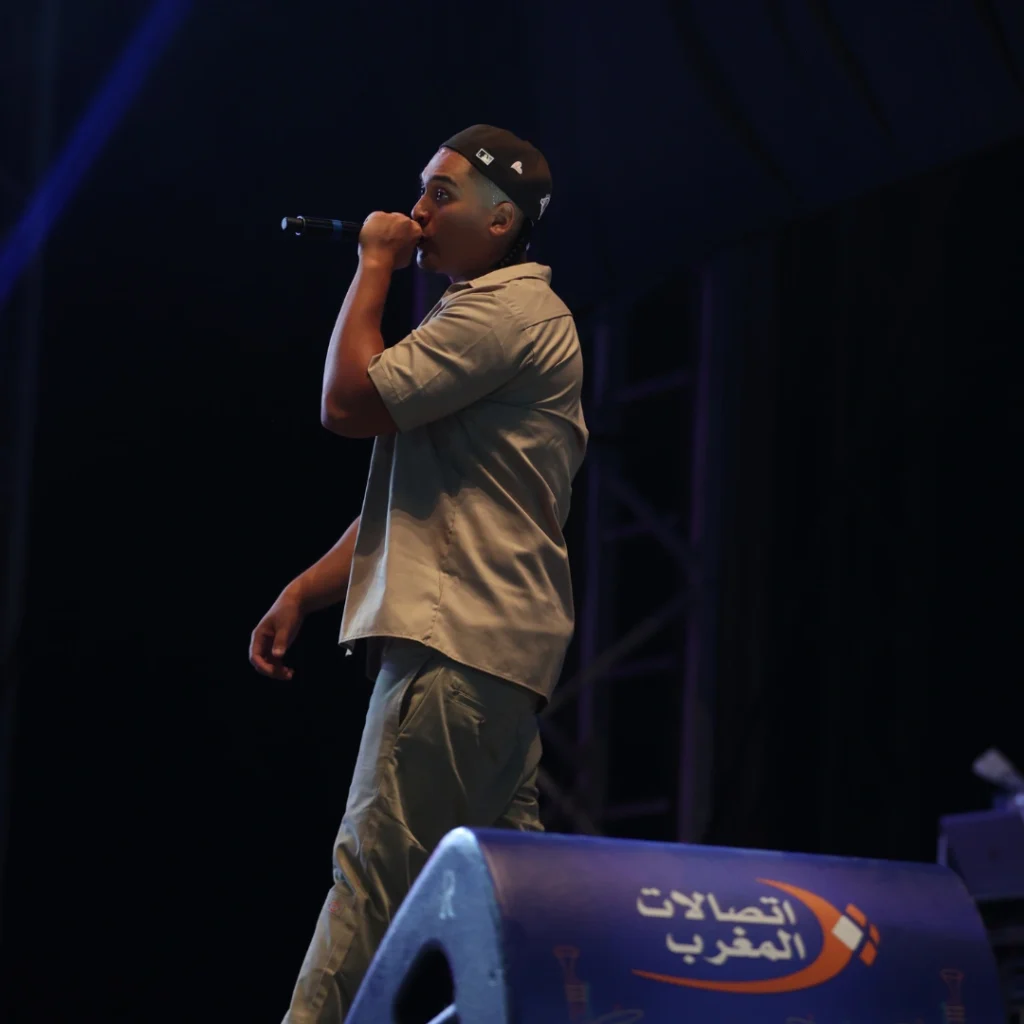
YP is direct about his relationship with music. “Now, with social media pressure, we get lost in the algorithm. We lose the enjoyment of making music,” he explains. Some of his milestones arrived without pursuit. “I never thought of making music with people I admired, but it just happened naturally. I ended up performing in front of thousands.” He adds, “music took me to places I never thought I would be in, but I don’t force music to take me. It just happens.” His only rule is memory over metrics. “Don’t let numbers make you forget how much fun it was making those songs. Don’t let it kill you.”
This patient philosophy is now culminating in his first major release. YP still has no solo album officially released, but that’s changing. His first EP, titled Evil Twin is set to drop in 2026 and will be a collaborative project with another rapper who shares the same mixed background; half Moroccan, half Filipino named Kraze Delarosa out of Montreal. What started as one track expanded into a full EP. “Before, I didn’t have time to work on a cohesive project,” he explains. Now, he clearly does. They already released three singles from the upcoming EP: “Ryuk,” “Menohada” (feat. Loun), and “Fashion Week.”
VIDEO: YP – Witness | Uploaded on Jan 27, 2019
YP on NORF Tape and the Lesson of Regional Unity
In 2024, YP appeared on a collaborative project released by Norfafrica, a digital collective spanning the entirety of North Africa. The project featured 26 artists from across the region and its diaspora. YP describes his participation on The NORF Tape as a lesson in what it looks like when a region collaborates without ego. “NORF played a big part in my career,” he says. The project allowed him to understand how releases work, how cohesion matters, and how regional thinking can shape creative direction.
What made NORF singular, in his view, was its geographic and stylistic range. “From Morocco to Egypt through Sudan and Libya, not one country was skipped.” It wasn’t purely a rap project either, it crossed genres. Some artists were just starting; others, like Dizzy DROS, were already established. “It was purely to showcase the established talent and the upcoming talent within the region and diaspora, it was really the music of the region,” he explained. For YP, it remains a reference point for what regional collaboration should look and sound like.
Conclusion: YP Growing Into His Own Pace
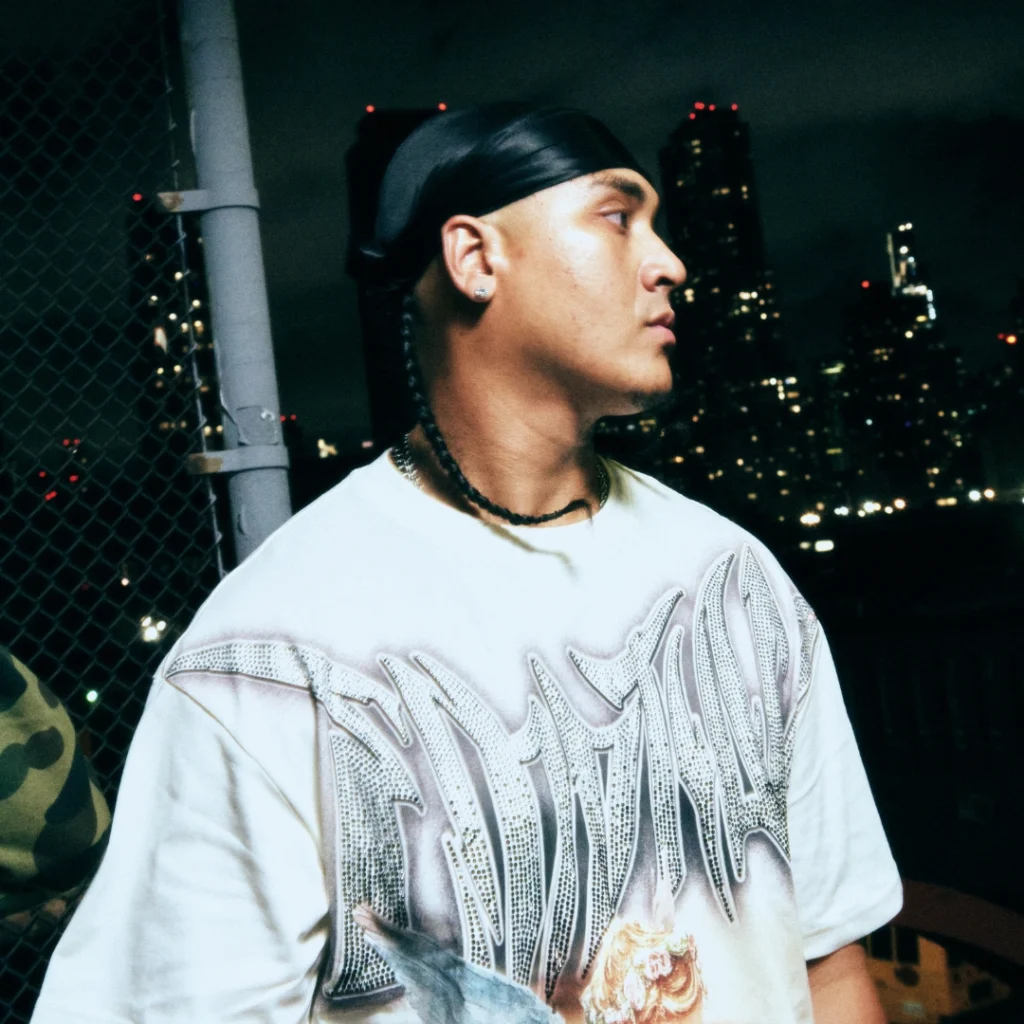
YP stands at a point where his different worlds are starting to align. He’s the kid from New Jersey who grew up on Jay-Z and 2Pac, the Moroccan who learned Darija to speak with his elders in Tetouan, and the rapper embedded in a Moroccan scene that’s rapidly scaling into the international. Each of those identities has had its own timeline, but now they are converging inside his first EP and the projects that will follow. As he puts more of what he’s learned, musically, politically, personally, into his songs, the picture of who YP is becomes sharper.
Written by:
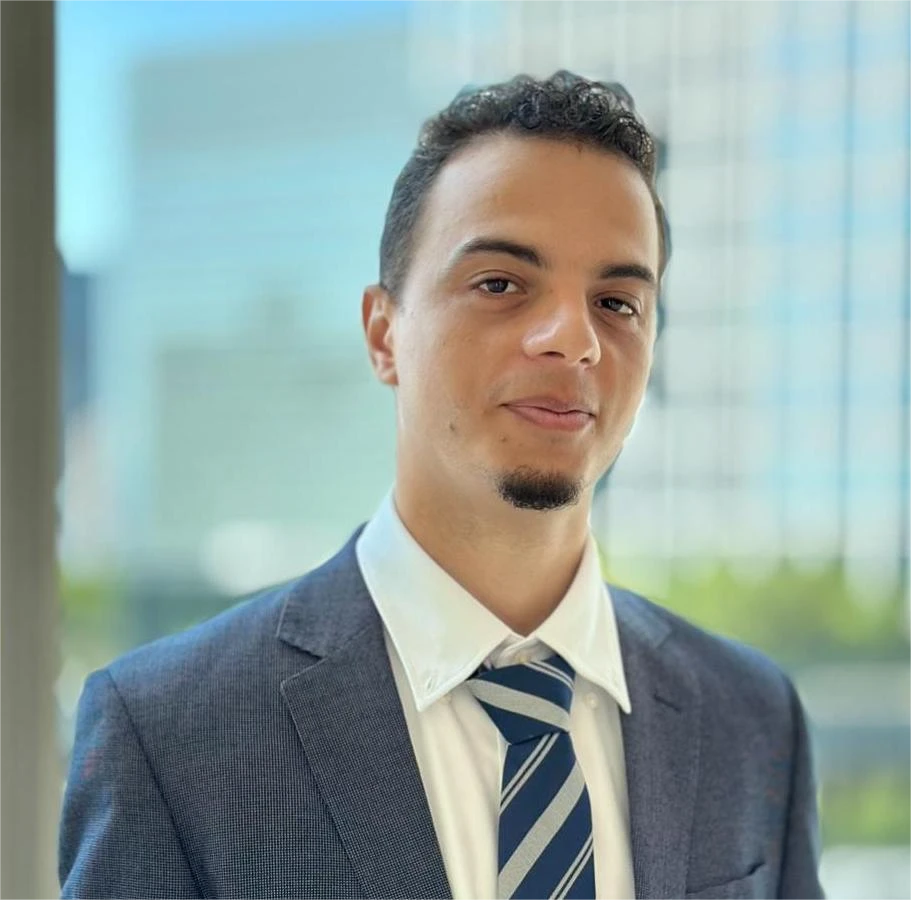
Ben Tarki Moujahid
Listen to YP's music
Author
 View all posts
A music critic and a researcher, Moujahid writes in-depth articles analyzing Moroccan and global hip-hop, blending insights from industry experts into compelling, well-rounded critiques. Beyond writing, he plays a pivotal role in shaping the magazine's editorial vision, refining its tone, structure, and style to elevate the reader's experience. As the lead editor, Moujahid meticulously oversees and polishes nearly all published articles, ensuring the magazine maintains its reputation as a trusted and influential voice in music journalism.