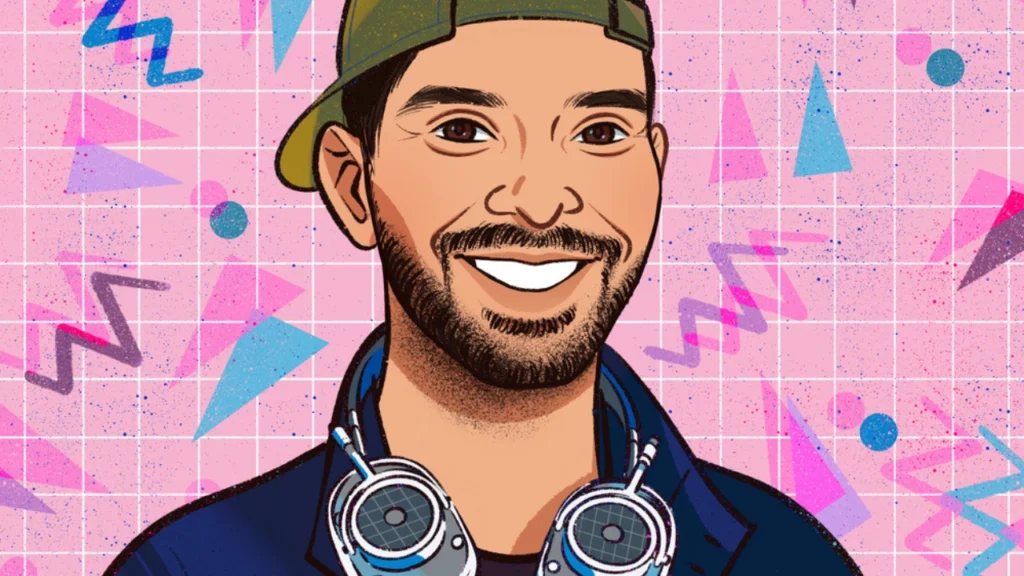
Danny Hajjar: The Quest for Nuanced MENA Music Journalism
Danny Hajjar on the necessity of in-depth reporting, the power of conscious rap, and why the global media can no longer afford to ignore the pulse of the MENA culture.
Danny Hajjar has established himself as one of the most essential voices framing Middle East and North Africa (MENA) music for a global audience. An American-Lebanese journalist, his career has been a determined pushback against surface-level reporting, championing the cultural depth and political resonance of the region’s artists across some of the most respected mastheads in international media.
Before taking on the demanding role of Founding Editor-in-Chief at Rolling Stone MENA, Hajjar had already built a remarkable portfolio that demonstrated his unique ability to combine rigorous industry analysis with acute cultural commentary, making him the ideal figure to launch the regional edition of the world’s most famous music magazine.
His previous work, whether detailing record revenue growth for GQ Middle East while simultaneously calling for stronger industry infrastructure and fairer monetization, or profiling pioneers like Marwan Moussa and his “trap shaabi” sound for Rolling Stone, consistently sought to uplift the region’s rapidly flourishing non-pop ecosystem. Meanwhile, writing for GRAMMY.com, he interviewed Saint Levant on how his trilingual EP and activism center Palestinian identity.
The scope of Hajjar’s reporting is vast and intentionally diverse. For The New York Times, he penned a crucial profile on Egyptian rap star Wegz, tracing his ascent from Alexandria to regional dominance and highlighting the cultural resonance of his Arabic trap sound. His work for The National detailed how Saudi rapper Blvxb utilized hip-hop as a medium to process grief and evolve the regional genre of Khaleeji rap.
In a candid conversation with DimaTOP, Danny Hajjar revealed the personal commitment to language and culture that fuels his work, his frustration with journalistic standards in the MENA region and beyond, and the intentional choices he made to ensure Rolling Stone MENA truly represented the entire region, from Dubai to Sanaa.
VIDEO: This episode of the Shik Shak Shook Ones podcast features Danny Hajjar breaking down the “Rolling Stone’s 50 Best Arabic Pop Songs of the 21st Century” list, a ranking he spearheaded that proved both significant and controversial.
Hajjar's Background: Language, Identity, and the Ear for the Region
Hajjar’s journalistic commitment is deeply personal, rooted in his dual American-Lebanese identity and a profound connection to the Arabic language. He notes that being a “fluent Arabic speaker” and having a family that ensured he was “constantly exposed to Lebanon, its culture, history, and music” was a key privilege. He regularly spent significant time in Lebanon with his family. This continuous exposure allowed his parents to successfully pass on the language and culture that have always been incredibly important to his family. This foundation allows him to navigate the diverse dialects of the region.
This cultural curiosity is what propelled him into music journalism. He recalls that as a teenager in Lebanon, he “burned so many CDs of music from around the region, that’s how I discovered the music of my own culture and the wider MENA region.” It was his cousins who introduced him to early regional icons, including Aks’ser, whom he cites as the first Lebanese rapper he heard rap in their specific dialect. He was immediately impressed by this music, which successfully “merged the best of both worlds: the Lebanese language with the American rhythm (the rap beat).”
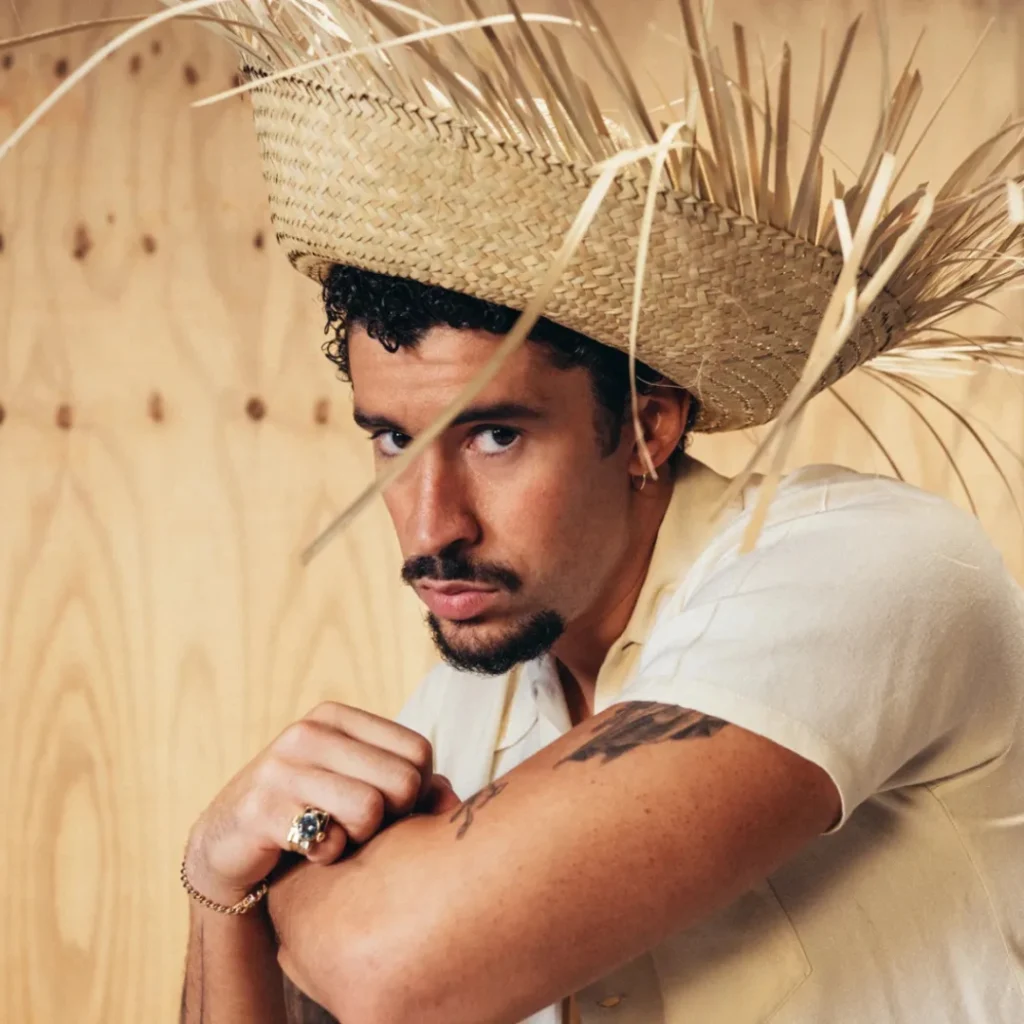
This experience solidified his admiration for the rap genre. Crucially, Hajjar emphasizes that language barriers are never an excuse to overlook great music. He posits, “I don’t understand Bad Bunny, but I love his music,” proving that “music is what moves me” regardless of comprehension, though he makes a concerted effort to grasp essential cultural nuances by consulting others when necessary.
From Fairuz to the Front Lines: The Start of a Critic's Journey
Hajjar’s formal career in music journalism began surprisingly late, evolving from a personal quest for knowledge. Around 2019–2020, during the initial COVID-19 lockdown, he was trying to write more about the surging new generation of regional stars like ElGrandeToto, Wegz, and Marwan Moussa.
Frustrated by the lack of quality English-language resources, he decided to create the change he wanted to see. He recalls realizing, “I wanted the new generation, when doing research and looking for information, to find quality resources. So, I started a newsletter.” He named it after his favorite song by Lebanese icon Fairuz, “Sa’alouni El Nas” (The People Asked Me).
Initially, after the devastating Beirut blast in August 2020, the newsletter began by covering developments in Lebanon before expanding to the wider region. He found joy in “representing these voices,” believing that “Music is powerful; it connects people.” His first published piece appeared in New Lines Magazine in February 2021, focusing on North African hip-hop.
This piece, titled “Hip-Hop Finds Its Groove in North Africa,” was the culmination of years of fascination with the scene, particularly how artists there “fluidly mix so many languages: Italian, Spanish, French, Portuguese, etc.” He notes that this blend is “so smooth and natural; it’s truly unique.” In exploring this phenomenon, he spoke with historians and experts who explained that while language mixing is celebrated now, “it has a dark history rooted in colonialism,” a critical nuance Hajjar ensures he never overlooks.
VIDEO: Fayrouz – Sa’alouni Al Nas – Arabic and English lyrics | Danny’s favorite song by Fairuz, that he named the newsletter after.
The Truth-Telling Genre: When and How Rappers Can Speak Up
A significant dimension of Hajjar’s work involves the intersection of rap music with social and political commentary. He holds the firm belief that rap is fundamentally a “truth-telling genre, a protest genre.” However, he stresses that “Conscious rap can take many forms; it’s not always the traditional boom-bap we’re used to.”
For example, he cites Palestinian rapper Shabjdeed, who is not traditional but has created “some of the most provocative songs about the occupation in Palestine.” He also highlights the power of the personal, referencing Jay-Z’s album 4:44, which, while not “conscious” in the political sense, is a powerful “masterpiece” focused on family.
Despite this range, he wishes all rappers would be “politically engaged, not just musically, but to genuinely care about what’s going on in their country.” He praises Moroccan rapper Khtek as a great example, noting he saw how active she was “on her story posts and on the ground during the Gen Z protests in Morocco,” even without releasing a protest song. It’s about genuine commitment, not just the output. Yet, he is keenly aware of the complex circumstances artists face, raising the questions: “Can they speak up?” and “what would move them to speak up?” as challenges like “clauses with labels, family endangerment, and more” can restrict an artist’s voice.
This understanding of nuance is what he believes is missing from much of the region’s music journalism, which often suffers from surface-level coverage. Hajjar advocates for a “whole cultural shift,” requiring investment in “better journalistic training and stronger ethics” and, crucially, the presence of “strong editors” who push writers to go deeper. He also challenges the audience, asking readers to “expect more of ourselves as readers: ‘Is this what we want?’ ‘Is this what this publication is here to offer?’ and so on.”
VIDEO: Grandmaster Flash & The Furious Five – The Message (Official Video) | One of the most impactful conscious rap songs.
Launching Rolling Stone MENA: A Truly Regional Vision
The founding of Rolling Stone MENA became Hajjar’s most direct effort to implement the journalistic standards he advocates for. His tenure as Editor-in-Chief was guided by a strict mission of regional representation. “I didn’t want us to be like other editorial sources that are heavily segmented, focusing mainly on one region (just the Gulf, or the Levant, or North Africa),” he asserts.
We made a deliberate effort to cover “all kinds of artists, from the small to the big, from Dubai (UAE) to Casablanca (Morocco) to Sanaa (Yemen),” operating under the principle: “If our name is Rolling Stone MENA, then we have to be representative of the entire region.” He also made sure to cover the Arab diaspora in Europe and beyond, acknowledging that the “most interesting music is often born out of struggle,” and committed the publication to covering political conversations, explaining: “I wanted to make sure we had the pulse of the culture, not just say, ‘Here’s a new song,’ but instead ask, ‘What’s going on in Iraq?’ and ‘How is the genocide in Gaza impacting music?'”
This mandate was immediately reflected in the magazine’s cover choices, a powerful tool to signal editorial intent. Hajjar stated he wanted the first cover to be “a Palestinian woman, the pulse of the region.” The inaugural cover featured Palestinian-Jordanian singer Zeyne. The second was Moroccan rapper Small X, a “foundational figure in hip-hop for the region, and especially Morocco.” This choice was a direct message, demonstrating that they “wouldn’t skip Morocco,” a common oversight of other regional publications, despite it being “arguably the most vibrant scene, along with Egypt.”
The third cover represented the diaspora, featuring Canadian-Lebanese music producer 40 (Noah Shebib), who Hajjar recognized as “one of the biggest musicians of the last 20 years.” The fourth cover, kept secret, will feature an artist “from an area that many wouldn’t expect,” emphasizing that “Who we put on the cover means who we care about.” Surprisingly, despite the prevailing trend toward brevity, Hajjar noted that they “got the highest engagement on the longer articles.”
VIDEO: Rajawi Falasteeni (Ma Nisma7 Feek Ya Gaza) | رجاوي فلسطيني (ما نسمح فيك يا غزة) | This anthem, known as “Rajawi Filistini” by Morocco’s Ultra Raja Casablanca club, has traveled the globe as a powerful expression of Palestinian solidarity, covered by Palestinian singer Zeyne.
Pushing Back Against Western Blind Spots: The Forgotten Region
Hajjar has been equally outspoken about what he views as significant blind spots within Western music journalism, particularly regarding the commercial and cultural power of MENA music. A major point of frustration arose from a Rolling Stone list of the “250 Greatest Songs“, which claimed to cover “classic hits from all over the musical map and every corner of the globe,” yet failed to include any songs from the MENA region.
This omission is especially egregious given that Western media itself calls the MENA region the “fastest-growing music market,” expressing “not to include any Arabic song, even though Arabic is the fourth most spoken language in the world, feels very off-putting.” Hajjar stressed the need for Western culture magazines to “hire journalists from the region.”
As he expressed on his Instagram, “The research was already there; all they had to do was take a song from there and add it to the list.” He was referring to a list he spearheaded for Rolling Stone titled “The 50 Best Arabic Pop Songs of the 21st Century,” for which he went to great lengths, consulting “many people from different countries across the region” to ensure it was truly representative and that he could ‘get it right.’
VIDEO: AmrDiab – Tamally Maak | Official Music Video – HD Version | عمرو دياب – تملي معاك | Egyptian pop icon Amr Diab’s “Tamally Maak” (Always With You) was ranked Number 1 on the Rolling Stone list of “The 50 Best Arabic Pop Songs of the 21st Century,” by Danny Hajjar.
Celebrating the Unique Rhythms of Moroccan Rap
Hajjar reserves particular enthusiasm for the Moroccan music scene, especially its rap output, though he notes its unique challenge: it is “still in an insular.” While the market is thriving and bleeds into Algeria and Tunisia, it “hasn’t crossed into the Middle East as much as I want it to,” a barrier that has existed for decades despite the fact that “a lot of the best music is coming out of Morocco, from pop to rap.” He credits Morocco and Algeria as major contributors to the ‘raification of pop,’ a style now heard everywhere, citing artists like Soolking and Dystinct.
He believes Morocco and Egypt are the region’s current trendsetters, noting that the rhythms native to Morocco “offer a lot of space to create and innovate, and Moroccans take full advantage of that; the music is so diverse.”
He celebrates the scene’s complexity, wishing that the rivalry between Small X and Shaw had been covered more broadly, as their beef was a significant event that “opened up conversations in Morocco, but it sadly seemed to stay there.” He shouts out new artists like Valrieblud as “different from anything else I’ve heard recently” and praises EXTASIA by Ino Casablanca as “one of the best albums to come out this year (2025).”
The conversation wouldn’t be complete without mentioning ElGrandeToto, whom Hajjar calls “the biggest name in the region,” appreciating how he “co-signs everyone” and literally brought together artists who were in a beef for the 2022 mega-collaboration “Salina” (Ft. Stormy, Khtek, Tagne, Abduh, 7liwa, Vargas, Ouenza, Figoshin, DollyPran, Small X, and Draganov, 2022), a difficult feat he remembers Toto confirming was not easy.
He also gives credit to figures like Ka7la for almost single-handedly putting Libya on the map, and Norf, whom he looks up to, saying, “I wouldn’t be here without Norf.”
The conversation concluded with Hajjar offering a special acknowledgement, offering high praise for our magazine: “I understood a lot of what was going on during the Gen Z protests in Morocco thanks to that article you published on rappers’ reactions to the protests… I love DimaTOP!” He added that he continues to learn more about Moroccan rap from our coverage, and we are deeply honored that our work provides valuable insight to a leading figure in MENA music journalism.
Danny Hajjar's Enduring Thesis: The Pulse of the Culture
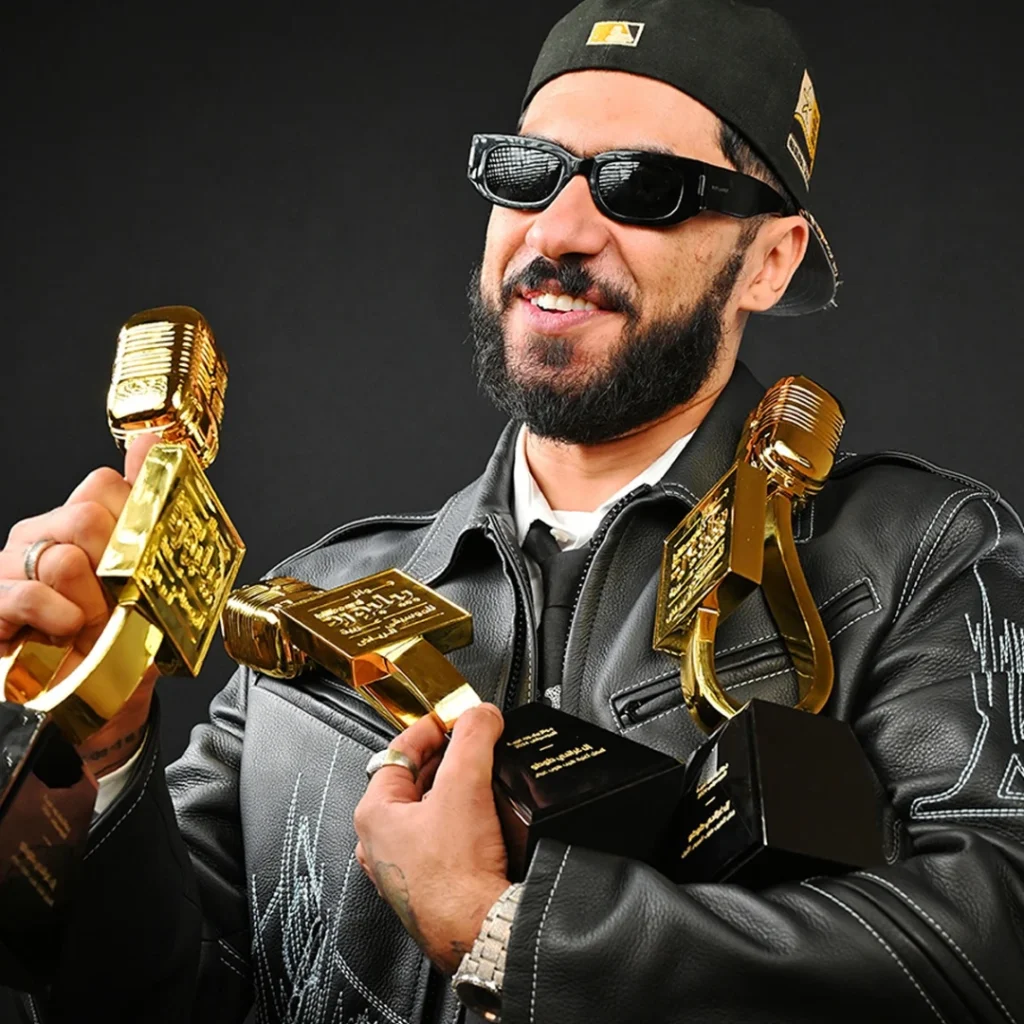
Danny Hajjar’s career stands as a powerful argument for the necessity of deeply informed, culturally empathetic, and ethically rigorous music journalism focused on the Middle East and North Africa. His transition from an independent critic determined to fill a knowledge vacuum to the helm of a global editorial brand like Rolling Stone MENA is not just a personal success story; it is a blueprint for how a globalized music industry must be approached.
By insisting on representation from Sanaa to Casablanca, by challenging Western media’s blind spots, and by constantly pushing writers and readers alike to demand more, Hajjar has ensured that the extraordinary complexity and vibrancy of MENA music is finally being documented with the seriousness it deserves. His work confirms that the “pulse of the culture” is often found in the struggles, the politics, and the diverse dialects of a region that is finally commanding the world’s attention.
Written by:
Ben Tarki Moujahid
Author
 View all posts
A music critic and a researcher, Moujahid writes in-depth articles analyzing Moroccan and global hip-hop, blending insights from industry experts into compelling, well-rounded critiques. Beyond writing, he plays a pivotal role in shaping the magazine's editorial vision, refining its tone, structure, and style to elevate the reader's experience. As the lead editor, Moujahid meticulously oversees and polishes nearly all published articles, ensuring the magazine maintains its reputation as a trusted and influential voice in music journalism.