BR Prod: The Man Behind the Most Iconic Recording Studio in Morocco
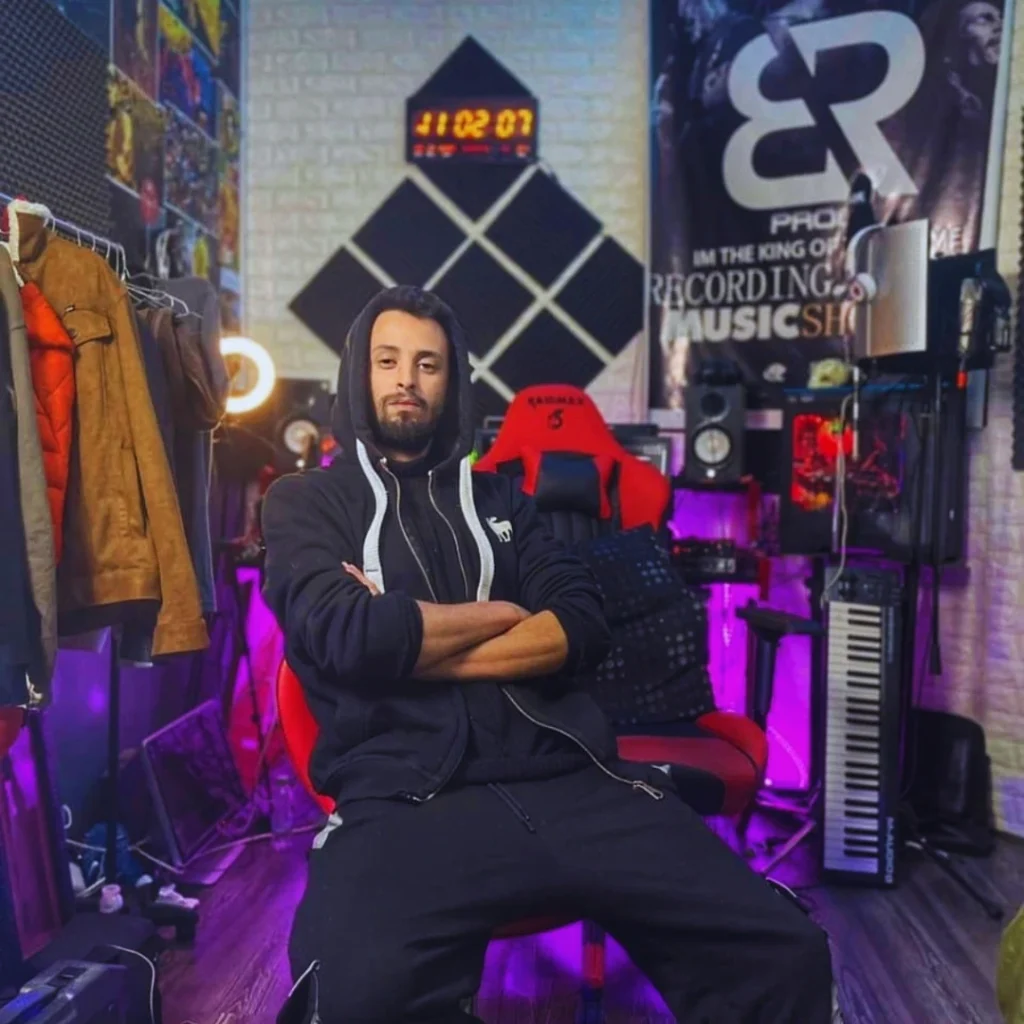
Ask any rap fan in Morocco to name the country’s most iconic recording studios, and it is almost impossible to get to three without hearing the name: Bertouch Records. It is rare for a recording studio to become as famous as the artists who record there, yet Bertouch Records has managed to do just that. While the studio has become a household name in the nation, the man behind the boards has remained in the shadows. Born in Fes, Khalid El Ghoual has been a quiet but central figure in Morocco’s hip-hop scene since the mid-2010s.
Since he launched Bertouch Records from his parents’ house, he quickly grew into one of the most influential independent studios in North Africa. From raw talent development and low-cost music videos shot on a phone to full-scale rap battle series and documentary projects, Khalid has gradually shaped the sound and hip-hop culture of Fes while staying behind the scenes.
In an exclusive conversation with our magazine, Khalid El Ghoual reflected on the humble beginnings of Bertouch Records, the golden era that produced icons like Youss45 and T-Flow, the creation of the Beff Baff rap battle series, his recent Obsidian EP documentary project, and his vision for the future of Moroccan hip-hop infrastructure.
VIDEO: TFlow – BRM BRM BRM (I’M THE KING MIXTAPE) | Considered a classic and a cornerstone of Moroccan rap-singing.
Bertouch Records’ History: The Birth and Rise
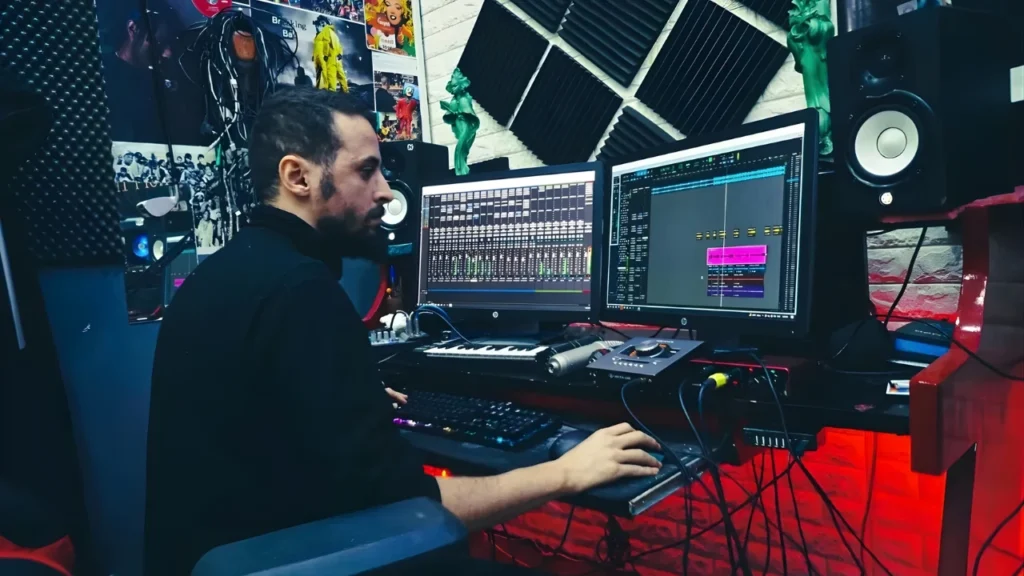
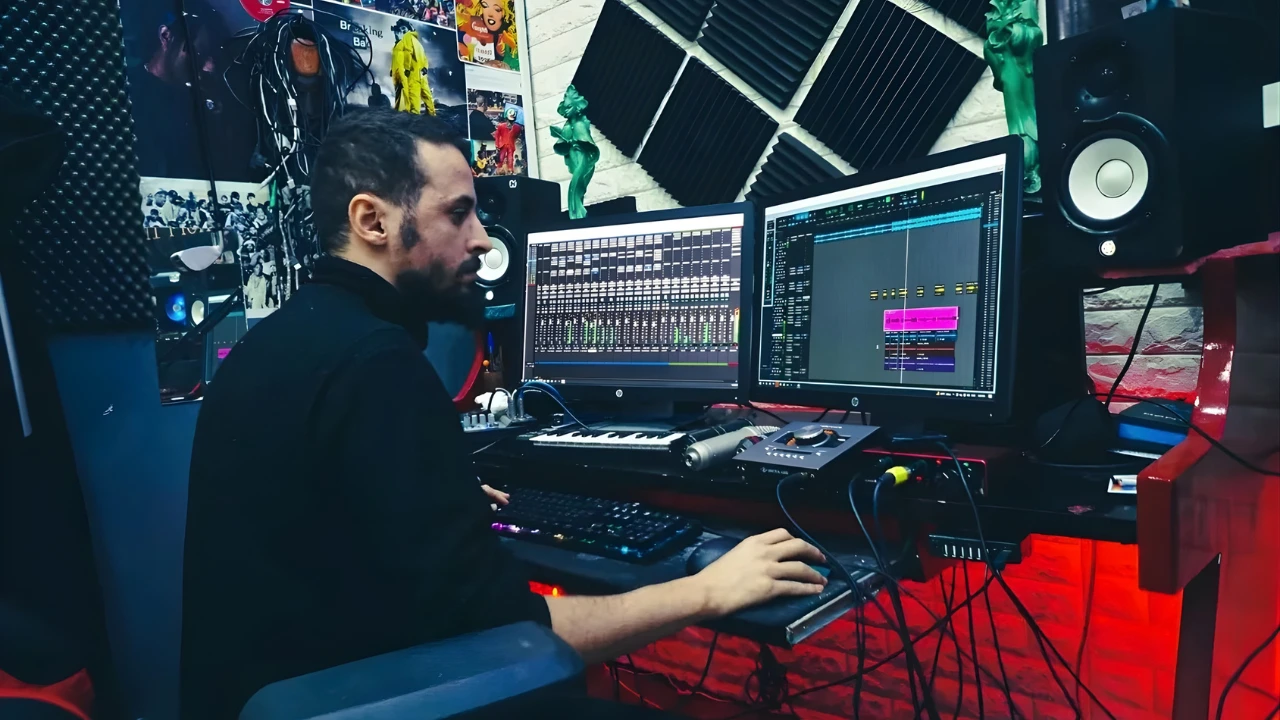
Khalid El Ghoual was born in the old medina of Fes and has been deeply involved in Morocco’s local hip-hop scene since the mid-2000s. In 2012, he officially launched Bertouch Records (often stylized as Brtouch or BR Prod) from a modest one-room space on the rooftop of his parents’ house. The name “Bertouch” comes from Moroccan Arabic and refers to a simple rooftop room – typically neither large nor luxurious – which accurately described his original setup. However, due to loud music and complaints from neighbors, he had to move to another apartment, where he faced the same issues with noise. Khalid eventually relocated the studio to a garage and installed soundproof wall boards to absorb the sound. That garage has remained the studio’s home ever since.
What set Bertouch Records apart was not high-end equipment or a big budget, but Khalid’s practical approach to supporting artists. When a rapper recorded a strong track, instead of releasing it with a static cover image on YouTube, he would suggest shooting a simple music video. Using just his phone, he captured two or three angles of the artist performing in the studio. These clips were uploaded to the studio’s channel or given to the artist for their own platforms. What began as a low-cost solution evolved into one of the most recognizable formats in Moroccan rap, helping turn several songs into classics and/or hits with tens of millions of views.
Among the most prominent releases are T-Flow’s “Brm Brm Brm” (released in 2017, with over 54 million views) and “Yak Adnya” (released in 2018, with over 42 million views). Both tracks were recorded, mixed, mastered, and filmed at Bertouch Records; they remain T-Flow’s most successful singles. Other studio-filmed videos that gained classic status include Youss45’s “Harb”, CrocoMan’s “Some-Day”, T-Flow ft. Youss45’s “Monalisa”, and Snaik’s “Fin L’Mas2oul”. Additional well-regarded tracks associated with the studio, though filmed outside it, include T-Flow ft. Youss45’s classic “Gang Star” and Youss45’s out-of-this-world song “Abna2 E’tabi3a.”
VIDEO: Youss45 – Abna2 E’tabi3a (Music Video) | Praised as one of Moroccan rap’s most distinctive songs in terms of flow and delivery.
BR Prod: Khalid’s Role as Artistic Director and Mentor
Khalid reflected on the studio’s role in nurturing talent. “The studio gave Moroccan rap two icons: Youss45 and T-Flow, plus other great artists like CrocoMan and Weld Lgriya,” he said. He was also among the first to recognize Shinigami’s potential, featuring him on the Beff Baff series three years before the rapper gained wider recognition through his versatile performance on the television program Jamshow.
Beyond providing a space and basic production, Khalid took an active creative role. “I didn’t just sit back and let them do their thing,” he explained. “I acted as an artistic director, helping develop toplines and flows, adjusting voices and tones, even suggesting changes to some lines.” At the same time, he was careful not to overstate his contribution. He acknowledged that many other artists recorded behind the same microphone and followed his guidance but did not receive the same public response. He added that Youss45 and T-Flow continued to grow but never outperformed themsevles after working with other studios and producers. In his view, the successful tracks of the two rappers resulted from “the combination of my skills as a producer, sound engineer, and artistic director with their phenomenal skills in rapping, writing, and singing.”
Khalid emphasized the informal, family-like atmosphere he cultivated. Youss45 and T-Flow especially were welcome to stay, eat and even sleep at the studio whenever they wanted, and he never charged them. He also directed full projects, including Youss45’s highly regarded mixtapes Despite Your Mother (2014) and B3id 9rib (2017).
VIDEO: Youss45 – BEFF BAFF (Competition Video) | The video features Youssef playing two roles: Youss45 vs. Fayadan.
Beff Baff: The Next Generation of Moroccan Battle Rappers
In 2022, Khalid expanded his activities by launching Beff Baff – a play on “beef” and the French word for speakers (baffles) – a rap battle series inspired by the street cyphers and area-representing battles he had witnessed growing up in Fes. The first season featured mostly upcoming artists, with Youss45 as the most established name. By 2026, several alumni had built names in the scene, including 0M and Shinigami (a Jamshow 2025 finalist). A second season followed in 2025. Khalid noted that the popular TV rap competition Jamshow appears to have drawn partial inspiration from Beff Baff, particularly its battle-rap segment.
The value of Beff Baff wasn’t just in the platform it provided, but in how it was marketed to the masses. To promote the project, Khalid and Youss45 collaborated on a visual concept that blurred the lines between creativity and psychological warfare. In a viral promotional video, Youss45 played two distinct roles, essentially “beefing” himself in a display of lyrical gymnastics that was as catchy as it was conceptually deep.
The battle pitted Youss45, the usual creative, unpredictable rapper, against Fayadan (meaning The Flood), an alter ego characterized by high-pitched, blistering flows and vicious bars. The two characters engaged in a “real” beef, with Fayadan mocking Youss45’s career setbacks, calling him “mal-behaved” and suggesting his personal issues are the only reason he isn’t commercially at the top of the industry. Youss45 fired back, attacking Fayadan’s “annoying” vocal pitch and “poor” existance. By airing out his own “dirty laundry” through this dual performance, Youssef reached a level of vulnerability rarely, if ever, seen in the scene. He concluded the battle saying: he was born for this, a warrior who would diss anyone who dared – including himself.
VIDEO: TVShow – EP Obsidian in 24H – Moroccan Rap’s Revolution | Produced by Khalid El Ghoual.
The Obsidian EP: A 24-Hour Deep Dive into Music Creativity
Khalid’s most recent major project, released on March 31, 2026, is the documentary-style “TVShow – OBSIDIAN EP in 24H.” The video captures the complete process of bringing together 12 rappers to write and record a nine-track EP titled Obsidian in roughly 24 hours of focused work (spread across several days). Filming took place in a rented villa, paid for out of Khalid’s own pocket, during the first four days of Ramadan 2026. The rappers stayed on-site, swimming, freestyling, bonding, and occasionally disagreeing while working on the music. The documentary alternates between candid daytime footage and nighttime interviews in which the artists speak their mind directly to the camera.
Khalid stressed the importance of environment: “It was important for the artists to be in a nice setting to get the best out of them.” He handled nearly every aspect of the project himself: producing all the beats, mixing and mastering the tracks, drawing the storyboard for the documentary, editing the footage, color grading, and uploading both the 48-minute video and the EP to YouTube and streaming platforms. His younger brother and a friend assisted with filming from multiple angles.
The full process, from the initial Instagram call for submissions to final release, took about two months. Khalid selected participants who matched the project’s vision and level, then brought them together in an online group before the villa sessions, followed by post-production. The featured rappers were Youss45, Scorpion, Shizza, Vizi Off, Nati9, Stvan, Shino, Hatake, S1, Adrinalin, Picassox, and Caracoss. With the exception of the established Youss45, most were emerging artists, an intentional choice to spotlight a “potential new wave of future stars”, Khalid expressed.
VIDEO: Croco-Man : SOME-DAY (BR Prod, 2017) | Another classic song recorded, mixed, mastered, and filmed at Bertouch Records.
Khalid’s Journey: Witnessing Four Generations, Contributing to Two
Reflecting on broader trends, Khalid observed that he has witnessed four generations of Moroccan rappers from 2006 to 2026, from early groups like Fez City Clan and Hel Lemkan through the mid-2010s era of Youss45 and T-Flow to more recent names such as Shinigami and Vira. He noted his strongest influence during the mid-2010s, when Youss45 and T-Flow became “the faces of Fessi rap” and prominent hip-hop figures nationwide. His statements were not an exageration as Youss45 is still ranked among rappers with the greatest and most versatile flows ever, while T-Flow is credited with popularizing sing-rap in Morocco, particularly through “Brm Brm Brm.” Both artists are recognized for their prolific output; many consider Youss45’s catalog, one of the largest in Arabic rap, to include at least 300 singles.
Khalid also took a moment to give the rappers of Fes their “flowers”, attributing their nationwide impact to a distinct local DNA, specifically their vocabulary and flows. He pointed out that this “Fessi uniqueness” was the driving force behind the audience’s favorite moments on the television program Jamshow. It wasn’t necessarily that the show prioritized them, but rather that the viewers gravitated toward them: Vira became arguably the biggest breakout star of the debut season based on public reception, despite not reaching the finals. Similarly, Shinigami emerged as one of the top three most-followed and beloved contestants of the second season.
Conclusion: Khalid on the Future of Morocco's Industry Infrastructure
Looking ahead, Khalid expressed a desire for greater investment in Morocco’s music infrastructure. He suggested that established rappers, from Don Bigg to ElGrandeToto and Stormy, should channel some of their earnings into building the industry itself, for example by creating a dedicated streaming platform for hip-hop-related content that could include movies, documentaries, YouTube-style series, and existing concepts like Beff Baff.
Through two decades of hands-on work, from a rooftop room to a soundproofed garage and ambitious multi-artist projects, Khalid El Ghoual has played a consistent, behind-the-scenes role in shaping Moroccan hip-hop through nurturing raw talent and prioritizing creative support and community over personal spotlight.
Written by:
Ben Tarki Moujahid
Author
 View all posts
A music critic and a researcher, Moujahid writes in-depth articles analyzing Moroccan and global hip-hop, blending insights from industry experts into compelling, well-rounded critiques. Beyond writing, he plays a pivotal role in shaping the magazine's editorial vision, refining its tone, structure, and style to elevate the reader's experience. As the lead editor, Moujahid meticulously oversees and polishes nearly all published articles, ensuring the magazine maintains its reputation as a trusted and influential voice in music journalism.