Best Moroccan Rapper of February 2026
This month’s top artist was democratically chosen through an interactive survey on our Instagram account @dimatopmagazine.
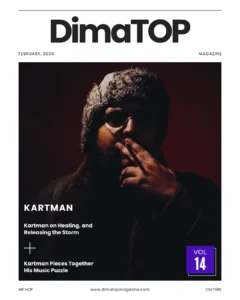
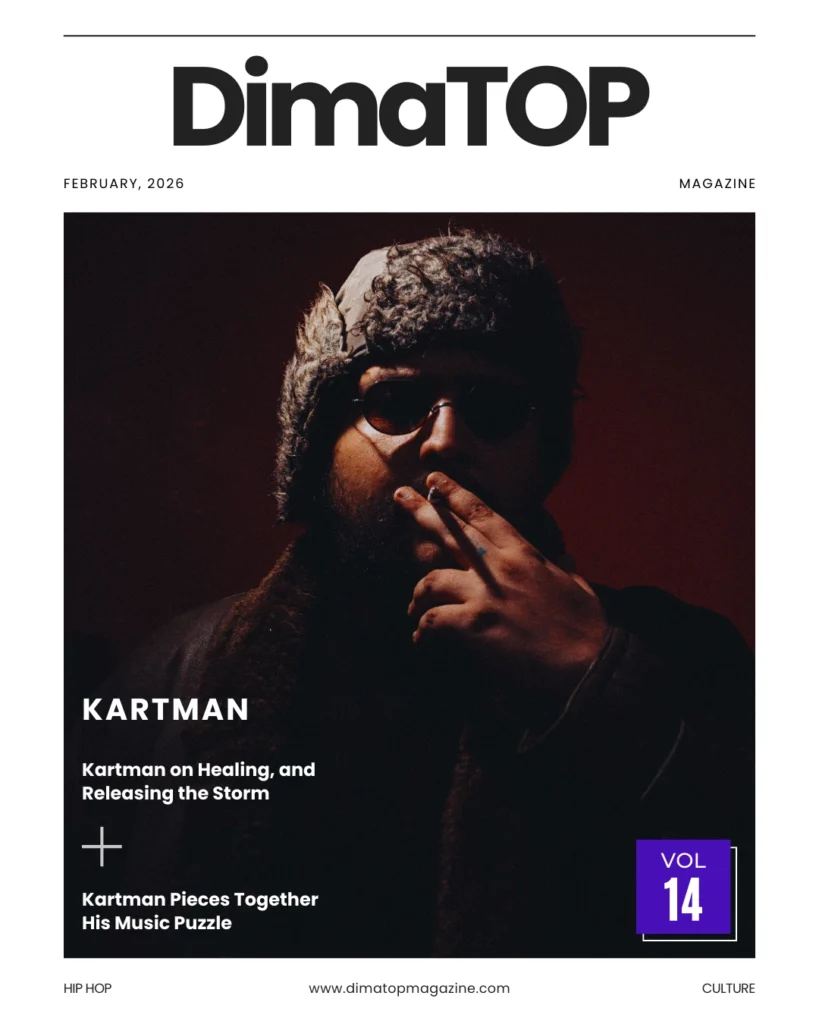
Kartman (born Hamid Asaadi in Casablanca), is a Moroccan rapper and record producer. He gained attention after being featured on Spotify’s Abatera X with Stormy, as well as after releasing Bala w Fas (2025), an EP that marked him as a rising name in the scene, especially the lead single, “Kho Baba”. We caught up with him to discuss his journey, his influences, and the stories behind his projects.
The Origin Story
On his nickname: “Spleux has been calling me Kartman since our university days. It’s a South Park reference, apparently, I have a similar sense of humor and some of those crazy character traits like Eric Cartman. When I started out as a producer, I didn’t think much of the nickname. Honestly, I also didn’t expect to make a place for myself in the scene this quickly. Within my first few years, I was able to work with some of the biggest names and contribute to some viral songs”.
On his start in music: “I began as a beatmaker at the end of 2018. My first big placement as a producer came in February 2020 with rapper Khtek on her debut single, ‘KickOff’. I later dropped my first own track, ‘Zar9a’ in November 2021”.
The Timeline of Releases
Key projects: “My debut EP, JE(UX) came out in March 2023. Then, in December of the same year, the collaboration with Stormy for Spotify’s Abatera X project happened on the song ‘Docteur‘ (2023). I honestly didn’t expect Stormy to choose me for that, but it gave me a ton of confidence in my music and craft, and brought me much more visibility.
After that came the CoBrA EP (2024) with Yeah Huss. It’s one of the first producer-rapper collaborative projects in Morocco. The Bala w Fas EP followed in January 2025, and my latest project, the EP Nimbus was just released this February (2026)”.
Stage Presence & Collaborations
On live shows: “So far, most of my stage presence has been as an opening act for many great rappers, like Khtek, ElGrandeToto (at Stade Mohammed V, probably the biggest stage in my city, Casablanca), and Stormy. These artists were among the first to trust me, along with producers like Houssam (aka Yeah Huss) and Anouar (aka VBGotHeat). They’ve been some of the realest people in my life. Houssam, for example, trusted me a lot and produced so many singles for me, never wanting anything in return for his support”.
On working as a producer: “As a producer, I’ve worked with several prominent names like Stormy, Tagne, Snor, and ElGrandeToto. Some of the songs I’ve produced include ‘Tchin Tchin’ by Stormy x Tagne, ‘Salina’ by ElGrandeToto, ‘Anmchi’ by Furelise x Raid, ‘Lights’ by Snor, and ‘Casawi’ by Bo9al.
I find it easy to communicate with rappers and explain my vision for the beat and the track as a whole. Maybe that comes from my time studying political science at university. Working with open-minded artists like Stormy and Khtek helped me trust my vision even more. I’d share my ideas on how to approach a track or who to bring in as a producer to make a song better, and they would actually listen. I’ve also worked as a DJ for artists like Bo9al and Khtek, and I was a hype-man for the latter at L’Boulevard in 2022″.
Deconstructing the Projects
On JE(UX): “For my first project, I decided to have no features. I wanted listeners to focus solely on me and what I had to say. The name JE(UX) is a fun wordplay. In French, ‘Je’ means ‘me,’ and ‘Jeux’ means ‘games’ (pronounced the same way). So it’s like saying ‘it’s my game’, the rap game is my music. I felt I had to make a name for myself as an artist, just as I had as a producer. The cover art was made by DOSEI; all of their work is dope, but I believe this one is among their best so far”.
On Bala w Fas: “I think Bala w Fas was the most intimidating project for me, for several reasons. It was my first time having guest features, it had 12 tracks total, and it played with different genres like afro, house, and drill.
On Nimbus: “Nimbus means the cloud that holds rain. After Bala w Fas, I went through some problems with work, family, and relationships. I was in a depression-like state, but I kept that to myself. You know, life happens. But suffering creates art. My way of processing that and expressing it is through music. Making and releasing music is like releasing that rain, letting those feelings out. It gives me the feeling that those problems are out there, and I’m ready for new rain, new challenges. The rain represents all the tears and pain I felt.
Nimbus is also a movie-related metaphor. In Harry Potter, when he gets his broom as a gift, it’s called the Nimbus 2000. It’s like saying, despite all the difficulties, I will still find ways to fly. For these reasons, I called it Nimbus. Even though the project is melancholic in its words, it’s very positive and hopeful in its sound, instruments and hooks”.
Influences & Philosophy
On his inspirations: “I’ve been into music since I was a kid, I’m a total melomaniac, and also a cinephile. Movies are a frequent theme in my music. I grew up listening to all kinds of music: rap, classic rock, grunge, indie, even Russian and Armenian pop, and French core. I used to mix electronic music, too. My inspiration is music as a whole, plus movies. When I hear music and watch films, I become that song or movie myself. If I have to name names, I’d start with groups that influenced me heavily, like System of a Down, Pink Floyd, and Tool. For rap, in France, it’s really just Vald. In Morocco, I was inspired by 7liwa during his peak, Inkonnu, and ElGrandeToto during a certain period. They gave me hope when I saw their impact on society. Now I truly believe that through music and movies, we can change society”.
On his audience: “I like to keep a respectful distance with my niche audience, give them good music and maintain a bit of mystery. I don’t like lying in my music; being authentic is very important, both for me and for my listeners. I try to avoid forced promotion for my music. I want to grow my niche audience organically. I understand marketing is important, but I don’t want to force it. I’ll share the cover, the tracklist, and maybe a few reels, and that’s it”.
The Big Picture
On his artistic vision: “I want people to understand that my music is a puzzle. Every project is a piece of it. There are two more projects to go, and then the whole picture will be complete. Next up is No Longer a Human EP and then the album. After that, I’ll post a picture or video explaining the connection between all these projects. That’s when the first puzzle will be done. That’s me, Kartman.”
New issues drop monthly. Stay tuned to keep your finger on the pulse of Moroccan hip-hop.
Become a DimaTOP Contributor
Are you passionate about Moroccan rap and eager to share your talents with the world? Whether you're a skilled writer or journalist, a visual storyteller with a camera, a talented graphic designer or illustrator, or an expert in any of the areas mentioned in this issue—we encourage you to get in touch!
Share your unique perspective and contribute to the growth of Moroccan hip hop. Send a sample of your work to contributor@dimatopmagazine.com
We can't wait to hear from you!
Related Articles
Author
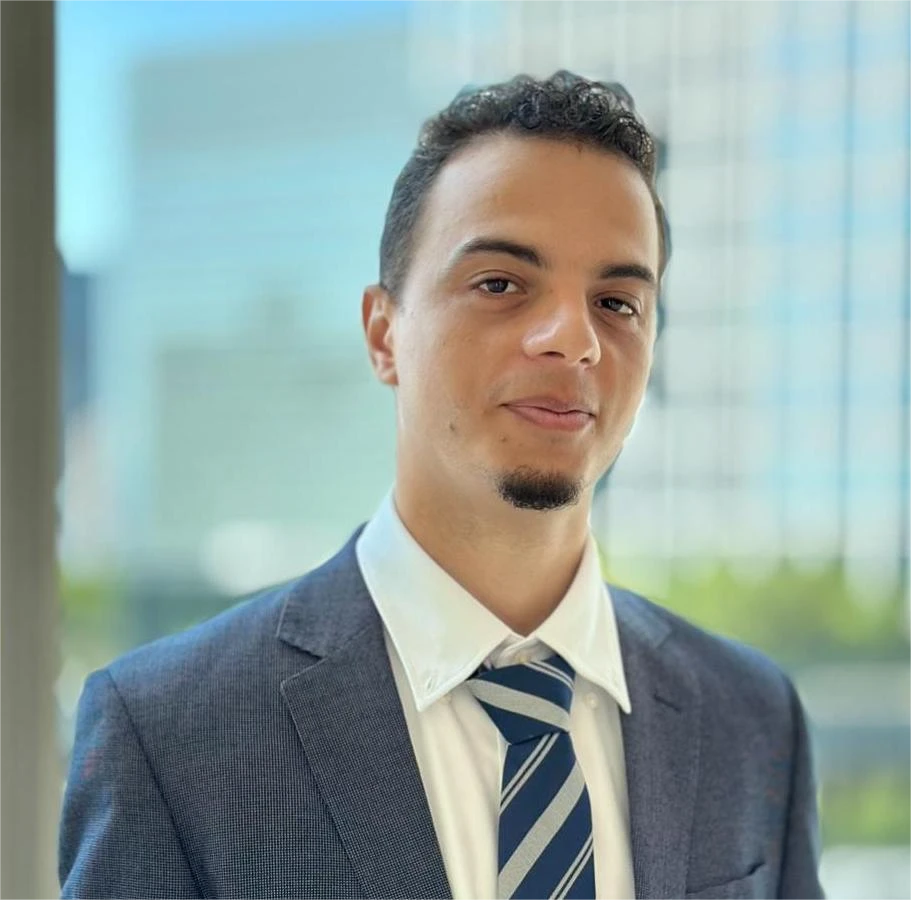
A music critic and a researcher, Moujahid writes in-depth articles analyzing Moroccan and global hip-hop, blending insights from industry experts into compelling, well-rounded critiques. Beyond writing, he plays a pivotal role in shaping the magazine's editorial vision, refining its tone, structure, and style to elevate the reader's experience. As the lead editor, Moujahid meticulously oversees and polishes nearly all published articles, ensuring the magazine maintains its reputation as a trusted and influential voice in music journalism.
View all posts