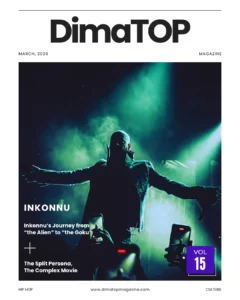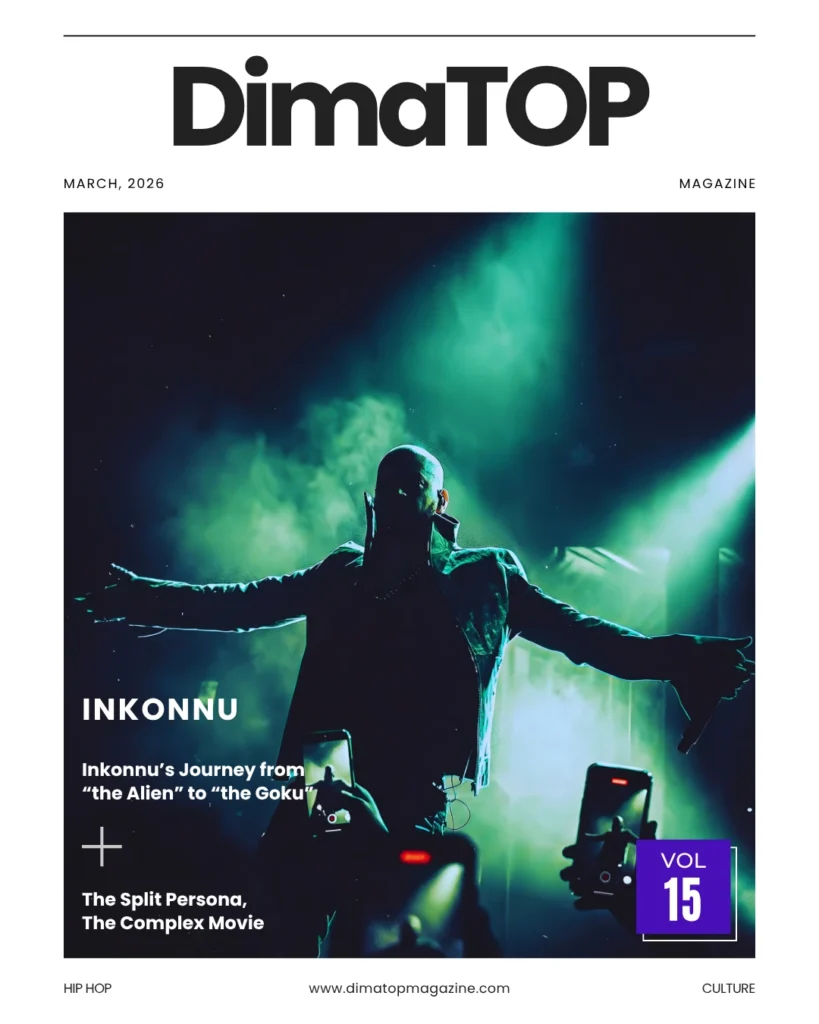
Best Moroccan Rapper of March 2026
This month’s top artist was democratically chosen through an interactive survey on our Instagram account @dimatopmagazine.
Inkonnu (born Ahmed Allali in Casablanca between 1990-1994), also known as “Inko” among his fans, has craved his name in Moroccan rap. Allali’s stage name is a deliberate play on the French word “inconnu” for “unknown,” reflecting a mysterious public persona that favors musical output over media appearances.
His career began in solo performance before he transitioned into the spotlight as part of A6 Gang. Formed alongside his close friend Drizzy, the group’s name paid homage to their Anfa origins through the local numerical code, Alif 6. They were catapulted into the mainstream by fellow Casablanca rapper 7liwa via the Zawa City collective. Following their 2015 debut track “Circles”, the group made a name in the industry through high-profile collaborations such as “Mi Amore” (Ft. 7liwa, 7ari, Zeroten) “La Fafa” (Ft. 7liwa & Laioung x ISI Noice) and “M.9.” (ft. Madd).
Eventually, Inkonnu chose to pursue a solo path to focus on his individual artistic vision. While he maintained his friendship with Drizzy, his departure from the Zawa City collective was marked by internal friction. The rift occurred after several of Inkonnu’s tracks were deleted by a collective member, an incident in which 7liwa allegedly declined to intervene despite knowing the responsible party. This transition, however, did not hinder his momentum; instead, it ushered in a period of significant technical growth.
His style evolved into a sophisticated blend of hip-hop, trap, and electronic music, often infused with traditional Moroccan elements like the loutar and bendir (as in his iconic Morap song “Hilun”). This “technical wizardry” has earned him praise from industry titans like the producer West, (and 7liwa), who labeled him a “phenomenon” for raising the bar of creative flow in the genre.
Discography of Inkonnu and the Era of “Arabi”
Inkonnu’s rise to the top of the rap game was marked by a series of prolific releases and rap battles. Between 2017 and 2019, he engaged in a notable beef with fellow ra[[er Lferda. The conflict began with a verse on “M.9,” leading to a rapid-fire exchange of diss tracks including Lferda’s “Oups” and “Jus d’Orange,” and Inkonnu’s “Kch Kch.”
During this same era, he released his foundational EPs, Akhi (2017) and Real Alien (2019), each consisting of five tracks. These projects paved the way for his debut studio album, Arabi, a 14-track magnum opus featuring a diverse roster of collaborators (Hindi Zahra, Small X, Asmae, Iguidr, and Nouvo). The album was both a commercial and a critical juggernaut, accumulating over 43.6 million streams on Spotify and ranking as the second most-streamed album in Morocco at the time, trailing only ElGrandeToto’s Cameleon. Its legacy has proven remarkably durable; Arabi remained among the most-streamed albums in Morocco through 2025 and was voted by a panel of over 300 music experts as one of the greatest Moroccan rap albums of all time. Today, it is regularly included in most conversations and lists regarding the “classics” of the genre.
Throughout this period, Inkonnu’s viral presence exploded; his track “Zahri” surpassed 60 million views on YouTube, and he maintained a consistent monthly Spotify listenership of over half a million. His reputation as “The Alien”, a nickname adopted by fans to describe his otherworldly talent, was further cemented by hit singles full of masterfull flows like “Ya Lili,” “Kenz,” and “Lbaroud.”
The Return: Split and the Future
After a two-year hiatus from the industry, Inkonnu made a return in December 2025. He first reappeared on the global stage by featuring on “Time for Africa” (from the album AWAM), the official anthem for the 2025 Africa Cup of Nations (CAN) produced by RedOne. His comeback was fully realized with the release of the single “Genkidama,” which served as the lead-in for his latest album, Split. The album was officially released on March 27, 2026, following a listening party at Casablanca’s Complexe Mohammed V, which Inkonnu reported was attended by over 8,000 fans. The album’s title and cover art – depicting a headless figure dragging multiple heads – refer to the internal conflict of various personas and energies inspired by the 2016 movie Split.
Split consists of 17 tracks, featuring collaborations with 5 artists: Draganov, Marwan Moussa, Shinigami, Zamdane, and Manal. The production, handled by names like Teekay, Nouvo and Hades, explores a vast sonic range from Brazilian afro to pop, while flows range from rapid-fire rap to singing. The thematic core of the project touches on his parents, his personal growth, and his commitment to creative evolution. Public reception has been mixed: while some fans have expressed a desire for the “Inkonnu of Arabi” to be back, others have praised the artist’s newfound “maturity” and “development”.
Regardless of the stylistic shift, Inkonnu’s influence remains profound; younger artists like Shinigami continue to cite him as an icon, describing his feature with Inko as a dream comes true, ensuring the place of Inkonnu among the top tier of Moroccan hip-hop remains secure. By embracing the “Genkidama” energy, have Inkonnu moved from a rapper who observes the world from the outside (the Alien) to one who is willing to lead it (the Goku)?
Cover photograph by Anas Weaky & MRT
New issues drop monthly. Stay tuned to keep your finger on the pulse of Moroccan hip-hop.
Become a DimaTOP Contributor
Are you passionate about Moroccan rap and eager to share your talents with the world? Whether you're a skilled writer or journalist, a visual storyteller with a camera, a talented graphic designer or illustrator, or an expert in any of the areas mentioned in this issue—we encourage you to get in touch!
Share your unique perspective and contribute to the growth of Moroccan hip hop. Send a sample of your work to contributor@dimatopmagazine.com
We can't wait to hear from you!
Related Articles
Author
 View all posts
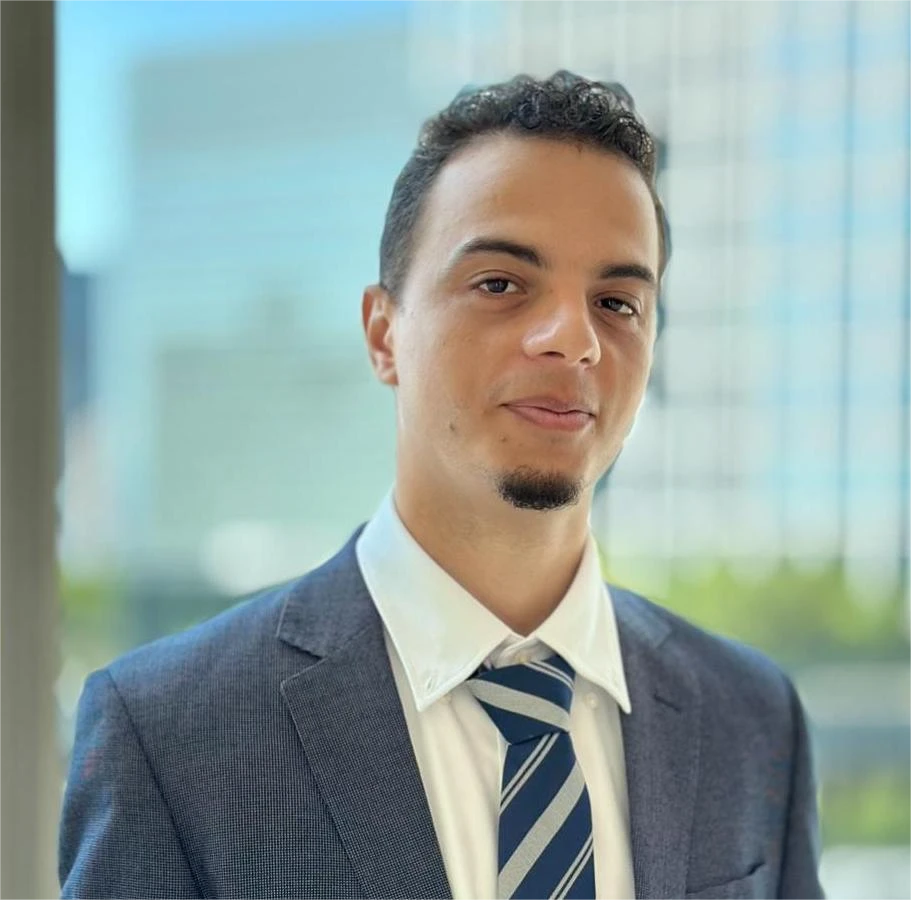
A music critic and a researcher, Moujahid writes in-depth articles analyzing Moroccan and global hip-hop, blending insights from industry experts into compelling, well-rounded critiques. Beyond writing, he plays a pivotal role in shaping the magazine's editorial vision, refining its tone, structure, and style to elevate the reader's experience. As the lead editor, Moujahid meticulously oversees and polishes nearly all published articles, ensuring the magazine maintains its reputation as a trusted and influential voice in music journalism.